

Athletes, coaches, and teams are constantly looking for professionals who can help them improve their mental performance, focus, and confidence. But before they ever step into your office, they’re searching online for trusted experts who understand the psychology of sports. If your website doesn’t appear when people search for “sports psychologist near me” or “mental performance coach in Los Angeles,” you may be missing out on potential clients.
That’s where SEO For Sports Psychologist becomes essential. SEO helps your website rank higher on Google so that athletes and teams can easily find you when they need your help. With the right SEO strategy, you can boost your visibility, build trust, and connect with more clients who are serious about improving their performance. In this guide, we’ll walk you through the best SEO practices designed specifically for sports psychologists.
What is SEO?
Search Engine Optimization (SEO) is the process of improving your website so that it appears higher in search results on platforms like Google, Bing, or Yahoo. For a sports psychologist in Los Angeles, SEO helps potential clients find your services when they search for things like “sports performance therapy near me” or “mental training for athletes in Los Angeles.”
It’s like making sure your office has a bright sign that stands out but online. Good SEO makes your website easier to find, more trustworthy, and more likely to attract athletes, coaches, or teams looking for mental performance support.
Difference Between SEO and Google Ads
Many business owners confuse SEO with Google Ads, but they are very different. Google Ads are paid advertisements that appear at the top of search results when someone searches for specific terms. You pay each time someone clicks on your ad. SEO, on the other hand, is free traffic that you earn by optimizing your website. For example, a sports psychologist in Los Angeles could run a Google Ad for “mental training for athletes,” which might get immediate clicks but would stop showing once they stop paying.
SEO takes longer to build but lasts much longer once your site ranks organically, you continue getting traffic without paying for every visitor. It’s like renting versus owning a home: Google Ads give quick results while SEO builds long-term value.
Local SEO
Local SEO helps your business show up when people search for services near them. For example, if someone in Los Angeles types “sports psychologist near me,” Google will show local listings that are close to their area.
To do this, you need to include your location in your keywords (like “sports psychologist Los Angeles”) and make sure your business information such as address, phone number, and hours is consistent everywhere online. Local SEO is especially important for sports psychologists because most clients want to meet someone nearby or within their city. Optimizing for local searches helps you connect with athletes and coaches right in your community.

Google Business Profile (Previously Called Google My Business)
Your Google Business Profile is one of the most powerful free tools for local SEO. It’s what appears on Google Maps and the sidebar when someone searches for your business.
A complete profile includes your clinic’s name, address, phone number, website link, photos, and reviews. For example, when someone searches “sports psychologist in Los Angeles,” your profile could appear with your office address in downtown LA, your contact info, photos of your workspace, and positive client reviews. Keeping this profile updated helps you attract local traffic, improves your visibility on Google Maps, and builds trust with potential clients before they even visit your site.
Why SEO is Important for Sports Psychologists
SEO is one of the best marketing tools for sports psychologists because most athletes and parents now search online for mental performance help. If your website doesn’t appear on the first page of search results, you’re missing out on clients who might be searching for exactly what you offer.
In a competitive city like Los Angeles, standing out is key. With good SEO, your website can reach professional athletes, college players, and coaches who want to enhance performance, manage pressure, or overcome mental blocks. The higher your site ranks, the more people trust your services because Google’s top results often feel like “the best” to searchers.
Competitive Offer
To rank well, your website should highlight what makes you different from other sports psychologists in Los Angeles. Maybe you have experience working with professional athletes, or perhaps you specialize in performance anxiety or confidence building. Emphasize your unique strengths throughout your site using strong, clear language.
For instance, a sentence like “I help Los Angeles athletes build mental toughness and consistency to reach peak performance” not only sounds engaging but also uses local keywords naturally. By combining SEO techniques with a strong competitive offer, you can position yourself as the go-to expert for sports performance psychology in your area.
Having A Good SEO Can Help With Getting More Customers. We’re Here To Help You!
On-Page SEO
On-page SEO refers to the elements you can control directly on your website everything from your content and structure to images and meta information. For a sports psychologist in Los Angeles, good on-page SEO helps your website speak clearly to both people and search engines.
URL Slugs
A URL slug is the part of a webpage’s address that comes after the domain name. Keeping slugs short and keyword-rich helps Google understand your page. For example,https://shereebill.com/sports-psychologist-irvine-246531/page1,” use something like “https://shereebill.com/sports-psychologist-irvine/los-angeles-sports-psychologist.”This makes it clearer to search engines and more professional-looking to visitors.

Title Tags
Title tags are the clickable headlines that appear in Google search results. They should include your main keyword and city to attract local traffic. For instance, a good title tag could be: “Sports psychologist Irvine| Mental Performance Coaching for Athletes.” This title is descriptive, keyword-optimized, and tells potential clients exactly what you offer.

Meta Descriptions
The meta description appears below your title tag in search results. It’s a short summary (about 150–160 characters) that convinces users to click. A great example for your practice might be: “Looking for a sports psychologist in Los Angeles? I help athletes boost focus, confidence, and performance with proven mental training techniques.” Adding a clear call to action, like “Book a free consultation,” can further increase clicks.

Alt Tags
Alt tags describe what’s in your images so that search engines (and visually impaired users) can understand them. For example, if you have a photo of an athlete meditating before a game, your alt text could say “A sports psychologist in Irvine helps athletes with performance anxiety, injury recovery, and mental resilience, using techniques like visualization and …” This not only helps with accessibility but also gives your site an SEO boost.

Internal Links
Internal links connect pages within your own website. For example, your “Sports Psychology Services” page could link to your “Performance Anxiety” page. This helps Google understand how your pages are related and keeps visitors exploring your site longer. For a Los Angeles sports psychologist, linking between pages like “Team Workshops,” “Individual Coaching,” and “Contact Me” can guide visitors smoothly through your site.
External Links
External links point to other trustworthy websites. For example, linking to articles from the American Psychological Association or research studies about mental performance shows that your content is credible and well-researched. It also helps search engines see that your website is part of a trusted network of information.
Compress Large Image Files
Images make your website more appealing, but large image files can slow it down. A slow website frustrates visitors and hurts SEO rankings. Tools like TinyPNG or Squoosh can compress images without losing quality. For instance, if your site has photos of athletes training in Los Angeles, compress them before uploading to make your pages load faster.
Improve Readability Level
Your website should be easy to read and understand even for someone who’s never heard of sports psychology before. Avoid using too much technical jargon, and write in a friendly, conversational tone. Use short paragraphs, clear headings, and bullet points where needed. Remember, your goal is to help athletes and parents in Los Angeles quickly understand how you can help them perform better.
Optimize Website
Finally, make sure your entire website is optimized for both users and search engines. This means including your target keywords naturally throughout your content, improving navigation, and keeping your site updated regularly. You can also add schema markup (special code that helps Google better understand your services). When someone searches “best sports psychologist Los Angeles,” your optimized website will have a much better chance of appearing on top.
Too occupied to create your SEO for your company? We make it easier for our clients!
Understanding Keywords
When it comes to SEO for sports psychologists in Los Angeles, understanding keywords is one of the most important steps. Keywords are the words or phrases that people type into Google when looking for a sports psychologist or mental performance coach. For example, someone might search “sports psychologist in Los Angeles” or “mental training for athletes.” Knowing which keywords your target clients use helps you create content and optimize your website so that it appears when they search online.
Monthly Search Volume
Monthly search volume refers to how many times a keyword is searched on Google each month. For instance, a keyword like “sports psychologist Los Angeles” might have a higher search volume than “athlete confidence coach LA.” By checking these numbers, you can see which phrases more people are using and focus on them. However, higher search volume also means more competition. So, finding a balance between popular and specific (niche) keywords is key for better ranking.
Keyword Difficulty
Keyword difficulty measures how hard it is to rank for a specific keyword. The more websites that already target that keyword, the higher the difficulty. For example, ranking for “sports psychologist” might be tough because many established professionals use it. But a more specific keyword like “youth sports psychologist in Los Angeles” could be easier and still attract valuable clients. Using tools like Ahrefs or Google Keyword Planner helps you find keywords that are both relevant and realistic to target.
Use Relevant Keywords to Your Business
It’s important to use keywords that relate directly to your services as a sports psychologist. If you help athletes with anxiety, performance improvement, or motivation, include those terms naturally in your content. For example, “mental performance training in Los Angeles” or “overcoming pre-game anxiety” are both relevant and specific to your field. These keywords not only improve SEO but also attract clients who are genuinely interested in what you offer.
Choosing the Right Target Keywords for Sports Psychologists
When choosing target keywords, think like your potential clients. What would they search for when looking for help? Maybe “how to improve athletic mindset” or “sports psychologist near me.” Combine both broad and specific keywords to cover all search types. Broad terms help with visibility, while specific ones bring in clients ready to book sessions.
Long-Tail Keywords
Long-tail keywords are longer and more specific phrases that usually have lower competition. Examples include “best sports psychologist for teens in Los Angeles” or “help for athlete burnout in LA.” These keywords bring in fewer visitors but often more serious clients because they know exactly what they want.
Short-Tail Keywords
Short-tail keywords are general and shorter, such as “sports psychologist” or “mental coach.” They get more searches but are also harder to rank for. Use them in combination with long-tail keywords to create a balanced keyword strategy.
Keyword Research Tools
To find effective keywords, you can use several tools:
Google’s Auto-Suggest (Autocomplete):
Start typing “sports psychologist” in Google, and it will suggest common searches like “sports psychologist Los Angeles” or “sports psychologist for athletes.”

Google’s Related Searches:
At the bottom of search results, you’ll see similar searches people make. These can give you more keyword ideas.

Google Keyword Planner:
A free tool that shows search volume and competition levels for different keywords.

Ahrefs Free Keyword Generator:
This tool helps you find related keyword ideas and their estimated difficulty.

Why “Sports Psychologist Near Me” Is a Good Keyword
High Intent to Book a Local Service
When someone searches for “sports psychologist near me,” they’re not just curious — they’re actively looking to hire a professional who can help with athletic performance, mental focus, or motivation. This is a high-conversion, service-based keyword, meaning searchers are ready to contact a local expert soon.
Strong Local SEO Opportunity
This keyword includes “near me,” which tells Google the person wants nearby results. That triggers Google Maps, local listings, and business profiles, giving sports psychologists a chance to appear right where local athletes and coaches are searching. It’s perfect for clinics, mental performance coaches, and therapy practices that serve a specific area.
Specific and Targeted Audience
Unlike general terms like “psychologist” or “mental health help,” this keyword targets athletes, teams, and fitness enthusiasts who already know what kind of support they need. That makes it easier to attract clients who fit your exact specialty — from youth sports to professional performance coaching.
Low Competition Compared to General Psychology Keywords
While terms like “therapist near me” or “psychologist near me” are very competitive, “sports psychologist near me” has less competition and a more defined audience. That means your practice can rank faster and convert more effectively without competing against hundreds of unrelated therapy listings.
Builds Trust Through Local Visibility
When people see your name, reviews, and address in local search results, it instantly adds credibility. Athletes often prefer working with professionals close to home or their training facilities, so local SEO visibility helps establish trust and connection faster.
Why “Sports Psychologist Degree” Is Not a Good Keyword
Educational, Not Service-Focused
People searching for “sports psychologist degree” are usually students or career seekers, not clients looking to hire a psychologist. They’re interested in learning how to become a sports psychologist, what schools offer the program, or what the requirements are — not in scheduling an appointment or booking therapy sessions. This means the keyword brings zero leads for practicing professionals.
Low Buyer Intent
This keyword has informational intent, not transactional intent. Users are in the research stage, trying to understand education paths or salaries, rather than looking for a service provider. Even if you rank well for this term, it won’t lead to new clients or revenue for your practice.
Highly Competitive with Universities and Career Sites
The top results for “sports psychologist degree” are dominated by universities, online schools, and career websites like Indeed or the American Psychological Association. Competing with these large institutions for ranking is difficult — and even if you do, the traffic won’t convert into paying patients.
Not Location-Based
Unlike “sports psychologist near me,” this keyword doesn’t include any local intent. The search could come from anywhere in the world, and the user has no interest in finding a psychologist in your city or region. This makes it useless for local SEO and irrelevant for businesses serving a geographic area.
Doesn’t Attract Your Target Audience
If you’re a sports psychologist or mental performance coach, your goal is to reach athletes, teams, or parents of athletes who need professional help not students looking to enter the field. Ranking for this keyword attracts the wrong audience and wastes your SEO efforts.
Track Keyword Ranking with Serprobot
After you choose and use your keywords, it’s important to track how your website ranks for them. Tools like Serprobot allow you to see if your site is appearing on the first page of Google or further down. Tracking helps you understand what’s working and what needs improvement. For example, if your keyword “sports psychologist Los Angeles” moves from page three to page one, it means your SEO strategies are paying off.
If your time is too valuable to spend on learning SEO, we can do it all for you!
Understand Search Intent
Understanding search intent means knowing why someone is searching for something. When someone types “sports psychologist near me,” they likely want to book an appointment. But when they search “what does a sports psychologist do,” they’re just looking for information.
Informational Intent
This type of search is when people want to learn something. For example, “how sports psychology helps athletes” or “mental tips for improving focus in sports.” Creating blog posts and informative content around these topics builds trust and helps position you as an expert in Los Angeles sports psychology.
Navigational Intent
Navigational intent happens when someone already knows what they’re looking for and wants to find it quickly. For example, someone searching “Dr. Smith sports psychologist Los Angeles” is looking for a specific practitioner or clinic. Make sure your website and Google Business Profile are easy to find so potential clients can reach you fast.
Commercial Intent
This intent shows that a person is researching services but hasn’t decided yet. Searches like “best sports psychologist in Los Angeles” or “sports therapy reviews” fall under this. Here, you can attract clients by having strong testimonials, case studies, and clear service descriptions on your website.
Transactional Intent
This intent happens when someone is ready to take action like booking a consultation. For example, “schedule sports psychology session Los Angeles.” To capture these searches, your website should have clear call-to-action buttons like “Book Now” or “Schedule a Free Consultation.”
Want to learn more about SEO?
Off-Page SEO
Off-page SEO focuses on everything that happens outside your website that can help boost your rankings on Google. For a sports psychologist in Los Angeles, this means improving your reputation, credibility, and online visibility through external sources like backlinks, guest posts, social media, and local listings. Google sees these outside mentions as signs that your business is trustworthy and valuable, which helps your website move up in search results.
Backlinks
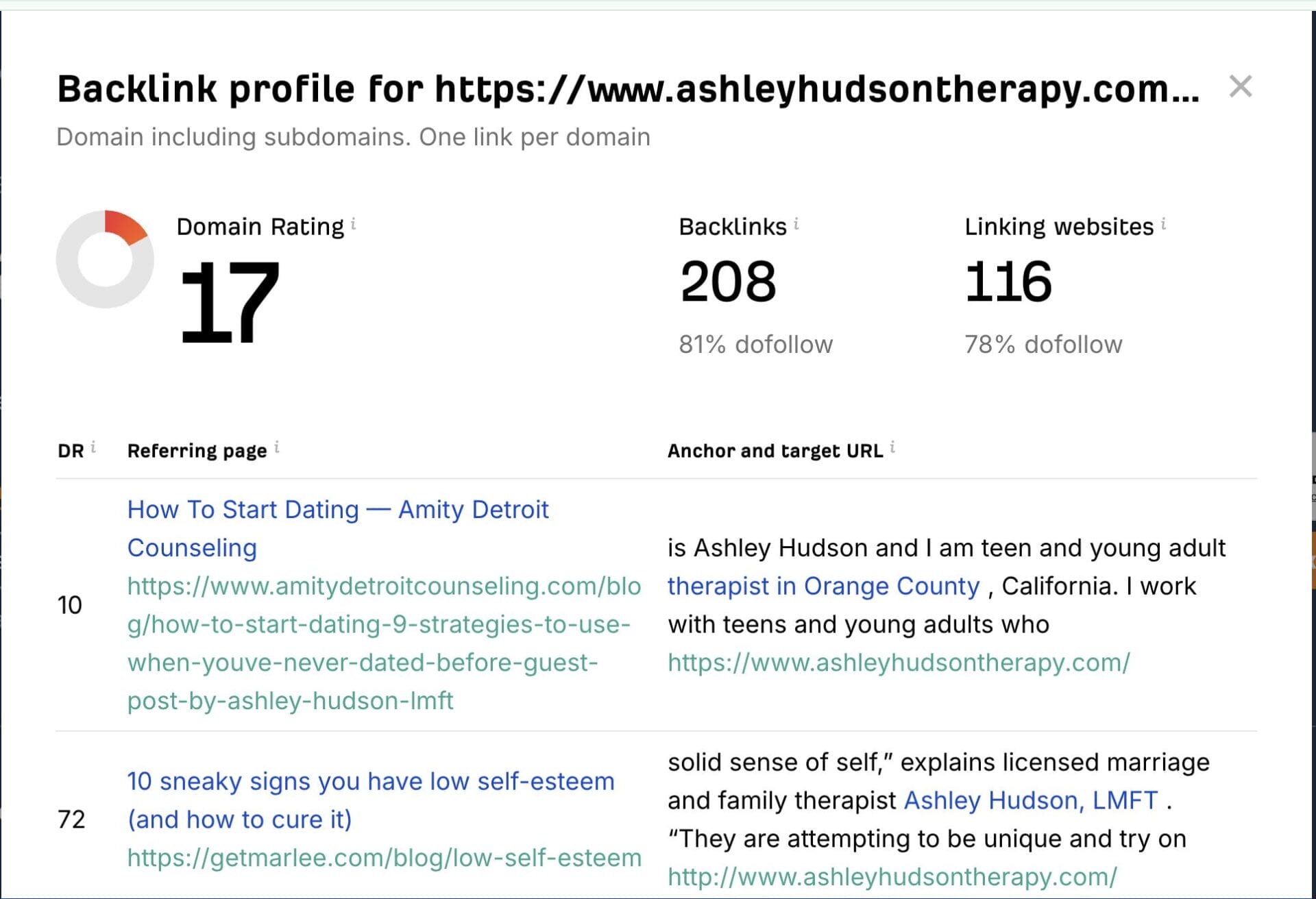
Backlinks are links from other websites that point back to your site. Think of them as “votes of confidence.” When reputable websites link to your sports psychology practice, Google assumes your content is credible and worth showing to more people. For example, if a Los Angeles sports magazine or athletic training website links to your article about “mental strength for basketball players,” it signals authority.
To earn quality backlinks, create helpful and unique content, such as blogs about athlete performance, interviews, or success stories from clients (with permission). You can also reach out to local organizations or sports clubs in Los Angeles and offer to collaborate on helpful mental wellness resources.
Guest Posting
Guest posting means writing and publishing articles on other websites that already have established audiences. As a sports psychologist, you can write guest posts for health blogs, athletic training websites, or even college sports pages in Los Angeles.
For example, you could write an article titled “5 Ways Athletes in Los Angeles Can Build Mental Resilience During Competition Season.” In exchange for your article, these sites usually let you include a short bio and a link back to your website which helps boost both SEO and credibility. Guest posting also helps you connect with more athletes, coaches, and parents who may be looking for mental performance guidance.
Content Marketing
Content marketing means creating and sharing valuable information that attracts and educates potential clients. For a sports psychologist, this could include blog posts, podcasts, videos, or free resources about topics like managing pre-game nerves or staying motivated after an injury.
When you post consistent, high-quality content, it builds trust and encourages others to share your work online which naturally creates backlinks and raises your authority. For example, publishing a blog like “How Los Angeles Athletes Can Handle Pressure Before Big Games” can appeal to both athletes and parents looking for help in your area.
Social Media Marketing
Social media is another powerful part of off-page SEO. Platforms like Instagram, TikTok, Facebook, and LinkedIn allow you to promote your expertise, connect with your community, and share helpful mental performance tips. While social media links don’t directly affect your SEO ranking, they increase visibility and traffic to your site, which does help.
For example, a Los Angeles sports psychologist could share short videos on Instagram about stress management for athletes or post quotes about mental toughness on LinkedIn. The more people share and engage with your content, the stronger your online presence becomes which can lead to more backlinks and higher Google rankings.
Local Listings
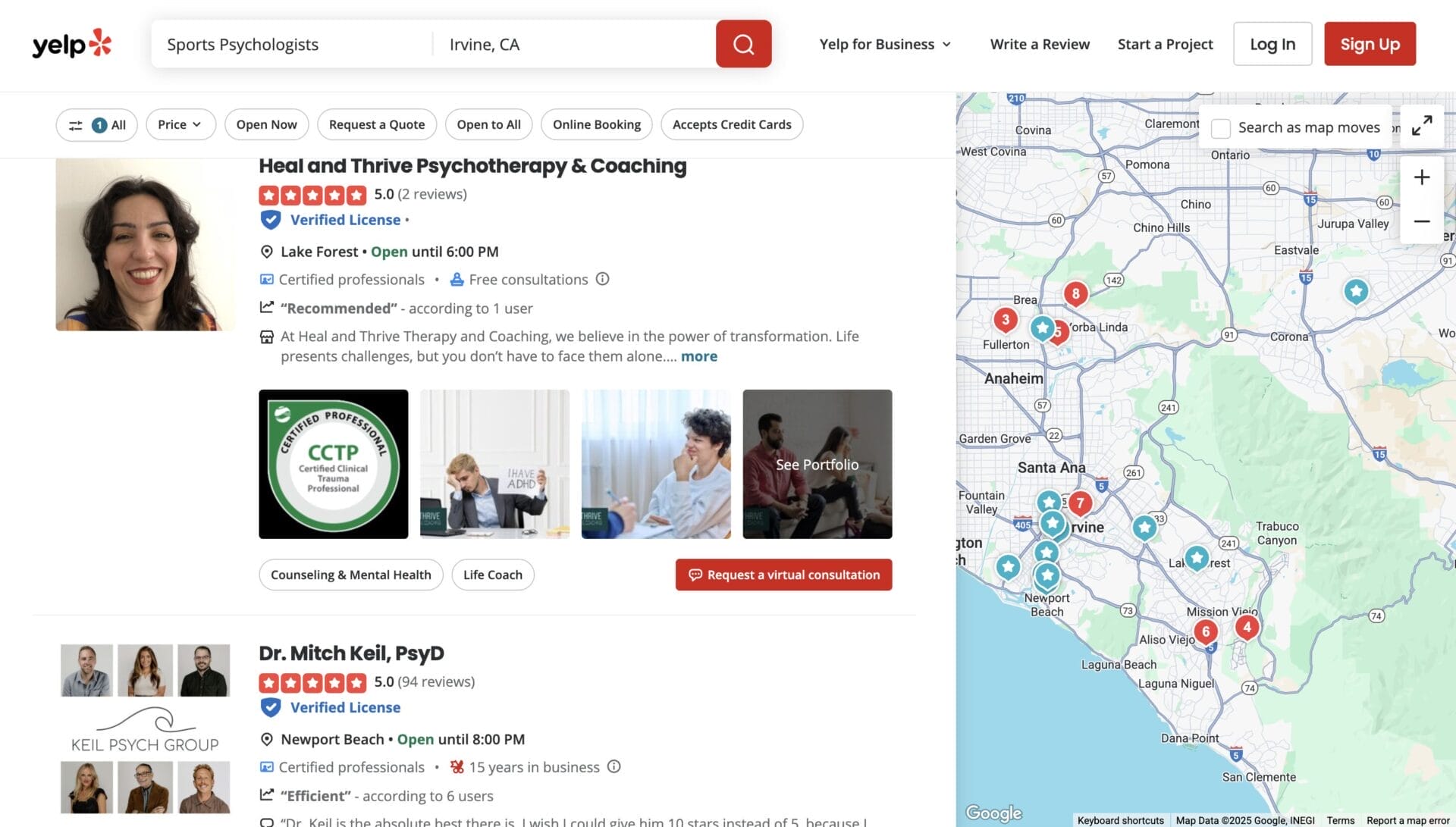
For a sports psychologist in Los Angeles, local SEO is crucial. You want your business to appear whenever someone searches “sports psychologist near me” or “athlete mental coach in Los Angeles.” To do that, make sure your business is listed correctly on Google Business Profile, Yelp, and other local directories.
Include accurate information like your address, phone number, office hours, and services. Add photos of your office or client sessions (if appropriate) to make your listing more appealing. Encourage satisfied clients to leave positive reviews these not only boost your reputation but also increase your chances of appearing in Google’s “local pack,” the top 3 map results.
Online Forums
Joining online communities and forums can also help your SEO and reputation. Websites like Reddit, Quora, or specialized sports forums are great places to share your expertise and link back to your content naturally. For example, you could answer questions about “how athletes can deal with performance anxiety” and include a link to your blog for more details.
Make sure your answers are helpful and not overly promotional people should see you as an expert who genuinely wants to help. Participating in local Los Angeles Facebook groups or sports communities can also help you connect with local athletes and coaches who may become future clients.
Is off-page SEO too much work for you to do alone?
AI SEO (aka LLM SEO, GEO, GSEO, ChatGPT SEO)
AI SEO, also known as LLM SEO, GEO, or GSEO, focuses on optimizing your content so it performs well on AI-driven search tools like ChatGPT, Gemini (Google’s AI), and Perplexity. These tools work differently from traditional search engines because they summarize information and give direct answers rather than showing a list of websites. For a sports psychologist in Los Angeles, this means your content must not only rank well on Google but also be written in a way that AI can understand, summarize, and recommend to users.
Optimizing for ChatGPT, Gemini, and Perplexity
Each of these AI platforms gathers information from online sources and uses it to create human-like responses. To optimize for them, make sure your website content is clear, factual, and unique. Write detailed answers to common questions like “What does a sports psychologist do?” or “How can athletes manage stress before a competition?” AI systems are more likely to pull from your site if it provides fresh, reliable, and well-structured information.
What AI SEO Is
AI SEO is about creating content that not only appeals to humans but also communicates clearly with AI systems. These platforms look for well-organized content, proper headings, FAQs, and factual accuracy. For example, adding a section on your website that answers “What is the role of a sports psychologist in Los Angeles high school athletics?” can help AI detect your local relevance and expertise.
Similarities and Differences
All AI platforms ChatGPT, Gemini, and Perplexity aim to deliver useful answers, but they do it differently.
-
ChatGPT focuses on well-written, conversational, and complete answers. It values clear structure, step-by-step explanations, and trustworthy sources.
-
Gemini (Google’s AI) prioritizes verified information from authoritative sources and rewards websites with strong E-E-A-T (Experience, Expertise, Authoritativeness, Trustworthiness).
-
Perplexity prioritizes freshness and source credibility. It likes up-to-date content and often shows where it got its information from.
These priorities constantly change as the platforms update, but in general, unique insights and local expertise — like examples from Los Angeles help you stand out.
Why Unique Content Matters
If your content looks just like everything else online, AI tools won’t prioritize it. AI systems already “know” most general information what they need is new insights, real experiences, and local relevance. For example, writing about “how Los Angeles athletes deal with competition stress during summer tournaments” is more original than just “how athletes deal with stress.” The more specific and fresh your information is, the better AI recognizes your authority.
YouTube Videos and PR Articles
AI tools like ChatGPT and Gemini also gather data from YouTube summaries and PR articles. This means if you post YouTube videos about topics like “mental training tips for LA athletes,” AI systems might pull information from them and credit your content. The same goes for press releases or online publications featuring your work — they increase visibility and strengthen your online reputation.
Changing Priorities
It’s important to remember that AI priorities shift over time. ChatGPT, Gemini, and Perplexity constantly update their algorithms, which can affect how content is ranked or displayed. Staying consistent with quality, adding updated local examples, and sharing real insights about sports psychology in Los Angeles will keep your content relevant no matter how these platforms evolve.
Need Help With AI SEO?
Technical SEO
Technical SEO focuses on improving the backend structure and performance of your website so that Google can easily crawl, understand, and index your content. Even if your sports psychology practice in Los Angeles has great articles and visuals, poor technical performance can prevent your site from ranking well. When your website loads quickly, looks good on mobile, and has strong security, it not only pleases Google but also builds trust with visitors.
Website Security (HTTPS)
Website security is one of the most important parts of technical SEO. When your site uses HTTPS, it means all the data shared between your visitors and your website is encrypted and protected. For a sports psychologist in Los Angeles, this is especially crucial because clients may fill out contact forms or share personal information online.
Google gives secure websites a small ranking boost because they provide a safer experience for users. To get HTTPS, you’ll need to install an SSL certificate, which can often be done through your website host. Visitors can tell your site is secure if they see a little padlock icon next to your website’s URL in the browser bar.
Page Speed
Nobody likes a slow website. Studies show that most users leave if a page takes longer than a few seconds to load. For example, if someone in Los Angeles searches “sports psychologist near me” and clicks on your site, but it takes too long to open, they might immediately go back and choose a competitor.
A slow site can also hurt your SEO ranking because Google wants to recommend fast, user-friendly pages. To speed up your website, compress large images, use caching tools, and remove unnecessary plugins or code. You can check your page speed using tools like Google PageSpeed Insights, which also gives suggestions for improvement.
Mobile-Friendly Website
In a busy city like Los Angeles, most people browse the web on their phones especially athletes, parents, or coaches looking for nearby professionals. If your website doesn’t display well on mobile devices, users might have trouble reading your content, clicking buttons, or filling out forms.
Google also uses mobile-first indexing, meaning it looks at your mobile site before your desktop version when ranking pages. To make your site mobile-friendly, ensure the layout adjusts to different screen sizes, text is easy to read, and images fit properly. A responsive design helps your site look professional and makes visitors more likely to stay longer and book a session.
Keyword Cannibalization
Keyword cannibalization happens when multiple pages on your site compete for the same keyword. For instance, if you have several blog posts about “sports psychology in Los Angeles,” Google may struggle to decide which page to rank higher. This can hurt your visibility and spread your traffic thin across similar pages.
To fix this, combine or reorganize similar pages into one strong, well-optimized article. Make sure each page targets a unique topic or keyword, like “mental resilience for athletes” or “stress management coaching in Los Angeles.” Keeping your keyword structure organized helps Google understand your website better.
Fix Duplicate Content
Duplicate content means having the same or very similar text across multiple pages on your website. This can confuse search engines and make it difficult to determine which page should rank.
For example, if your “services” page and “about” page both repeat the same long paragraph about sports psychology in Los Angeles, Google may treat them as duplicates. To fix this, review your website content and make sure every page offers unique information. If you need to use similar details, rephrase them naturally or add new insights so each page provides distinct value.
Fix Broken Links
Broken links, also known as “dead links,” happen when a page on your site or another website you link to no longer exists. They frustrate users and make your site look unprofessional. For example, if a Los Angeles visitor clicks on a blog link that leads to a 404 error page, they may lose trust in your site.
Search engines also view broken links as a sign of poor maintenance. Use free tools like Broken Link Checker or Ahrefs to regularly scan your site and fix any errors by updating or removing outdated links. Keeping your website error-free improves both user experience and SEO performance.
Improve User Experience (UX)
User Experience (UX) is about how visitors interact with your website. A good UX means people can easily find what they need, whether that’s booking a session or reading a blog post. For a sports psychologist in Los Angeles, that might mean having clear service pages, easy navigation, and visible contact buttons.
You can improve UX by simplifying your menu, using readable fonts, and breaking long text into smaller, digestible paragraphs. Adding engaging visuals like photos of your office or athletes (with permission) can also make your site more inviting. The better the user experience, the longer visitors stay which signals to Google that your site provides value.
Analytics and Monitoring Your Website
To improve your SEO over time, you need to track what’s working and what isn’t. Tools like Google Analytics and Google Search Console help you monitor important details, such as which pages get the most visits, how people find your site, and how long they stay.
For example, if you notice that your blog “How Los Angeles Athletes Can Overcome Performance Anxiety” is getting a lot of traffic, you might create more content like it. Analytics also helps identify issues like slow pages or high bounce rates. Regularly reviewing these reports helps you make data-driven decisions to strengthen your SEO strategy.
Want more homebuyers to find your services online?
Our SEO strategies help mortgage brokers rank higher and generate quality leads.
Common SEO Mistakes to Avoid
Keyword Stuffing and Over-Optimization
One of the biggest mistakes business owners make is trying too hard to include keywords everywhere. Keyword stuffing means repeating your target keywords too many times in a way that sounds unnatural. For example, saying “sports psychologist Los Angeles” in every sentence doesn’t make your content rank higher it actually hurts it.
Google can detect over-optimization and may penalize your site for it. Instead, use keywords naturally within helpful and readable sentences. Focus on writing valuable content that answers your audience’s questions while including relevant keywords a few times where they make sense.
Neglecting Mobile Optimization
In a large city like Los Angeles, most people search using their smartphones. Ignoring mobile optimization means your website could appear broken or difficult to use on smaller screens. If users have to zoom in or scroll side-to-side to read your content, they’ll likely leave. This increases your bounce rate and lowers your rankings. Always test your website on different devices to ensure that text, buttons, and images are properly displayed. A well-optimized mobile site not only boosts your SEO but also helps you convert visitors into clients more easily.
Ignoring User Experience
Even with great keywords and content, your SEO won’t work if your website is confusing or unpleasant to navigate. If your visitors can’t find important pages like your contact form or services, they’ll leave quickly, and Google will interpret that as a sign that your site isn’t helpful. Prioritize simplicity, clear organization, and engaging design. Include calls to action like “Book Your Consultation” or “Learn More About Athlete Mental Coaching.” In Los Angeles, where competition is high, a smooth and welcoming user experience can make all the difference between gaining or losing a client.
Conclusions
Technical SEO may seem complex, but it’s the foundation of a strong online presence. By focusing on website security, speed, mobile-friendliness, and user experience, you ensure that your sports psychology website in Los Angeles runs smoothly and meets Google’s standards.
Avoiding common mistakes like keyword stuffing and broken links helps keep your website professional and trustworthy. When you regularly monitor analytics, make small improvements, and stay up to date with SEO best practices, your website will continue to grow in visibility and attract more athletes, coaches, and teams seeking expert mental performance support in Los Angeles. Contact us if you need help with your seo!


