

You may be one of the treatment providers who rely heavily on referrals, healthcare networks, and word-of-mouth to grow your practice. While these sources are valuable, they can also be slow and unpredictable when it comes to maintaining a steady flow of patient inquiries.
At the same time, people struggling with substance use, or their concerned family members, are turning to Google every day to search for immediate help. If your addiction treatment center or counseling practice is not appearing at the top of those search results, those individuals may contact another clinic instead.
Google Ads offers one of the fastest ways to reach people who are actively searching for professional addiction treatment. It allows your clinic to appear at the exact moment someone is looking for support, making it easier to connect with individuals who urgently need help.
With the right strategy and proper compliance with healthcare advertising policies, Google Ads can become a reliable source of high-intent inquiries and consistent patient admissions.
This Google Ads for Addiction Specialists guide will walk you through the process of setting up and running effective Google Ads campaigns so you can reach more people seeking treatment and grow your practice.
What is Google Ads?
Google Ads is an online advertising platform where businesses can display ads on Google’s search results when users type specific keywords. Instead of waiting for people to discover your website organically, Google Ads allows your clinic to appear immediately at the top of search results.
These searches often happen during emotionally urgent moments. A person may be struggling with substance use, or a family member may be urgently trying to find treatment options. Being visible at that moment can mean the difference between someone receiving help quickly or continuing to struggle.
Google Ads allows your clinic to become that first visible option, making it easier for individuals seeking help to reach out to a licensed professional.
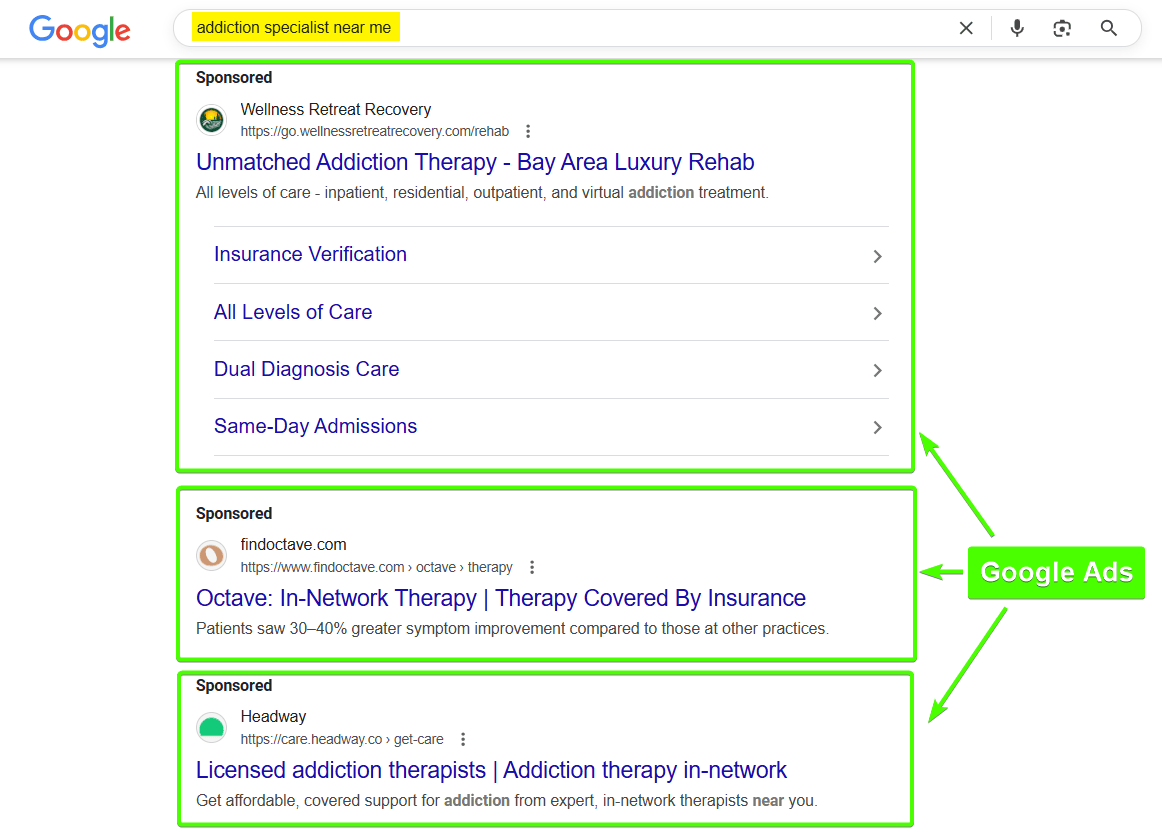
Top Search Results on “addiction specialist near me”, in San Francisco, CA:
Launching a Google Ads Strategy for Addiction Treatment Providers
Running Google Ads for addiction treatment requires more than simply creating an ad. Healthcare advertising must follow strict policies, and campaigns should be structured carefully to ensure both ethical marketing and high-quality patient inquiries.
The following sections explain the exact steps needed to build a campaign that reaches people actively searching for addiction support while maintaining compliance with healthcare advertising rules.
Healthcare Advertising Compliance for Addiction Services
Before launching campaigns, addiction specialists must understand Google’s healthcare advertising policies.
Substance abuse treatment advertising is considered sensitive healthcare advertising, which means Google requires additional verification.
Many addiction treatment providers must obtain LegitScript certification before advertising rehabilitation services. This certification confirms that the treatment provider operates legally and follows ethical standards when promoting addiction treatment services.
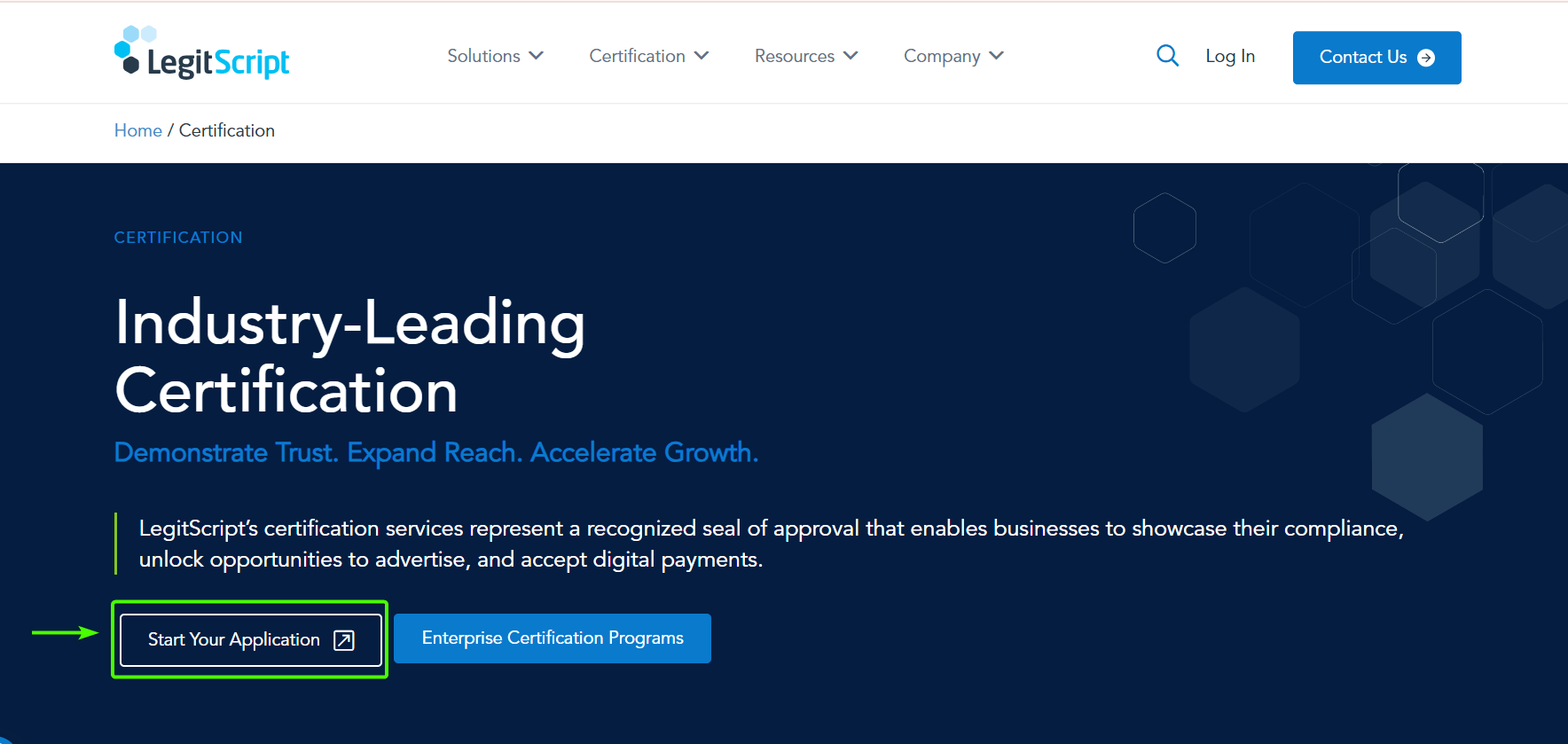
Note: For all addiction advertising, LegitScript certification is mandatory for Google Ads compliance. The entire process is thorough and can take several weeks to a few months.
Advertisers must also ensure that their ads do not contain misleading medical claims. Google restricts advertising related to certain medical content, including:
- Prescription drug sales
- Unapproved or experimental treatments
- Misleading recovery guarantees
- Clinical trial recruitment
- Unapproved substances
Following these rules protects both the clinic and the people seeking help.
Turn urgent searches into real patient admissions. We create targeted Google Ads campaigns that connect addiction specialists with individuals actively seeking treatment.
Schedule Your Free Strategy Call Today
Detailed steps on how to set up a Google Ads account for Addiction Specialists:
Google Ads Account and Campaign Creation
Google Ads Account Setup
Set up your account in ads.google.com and ensure your billing information is ready.
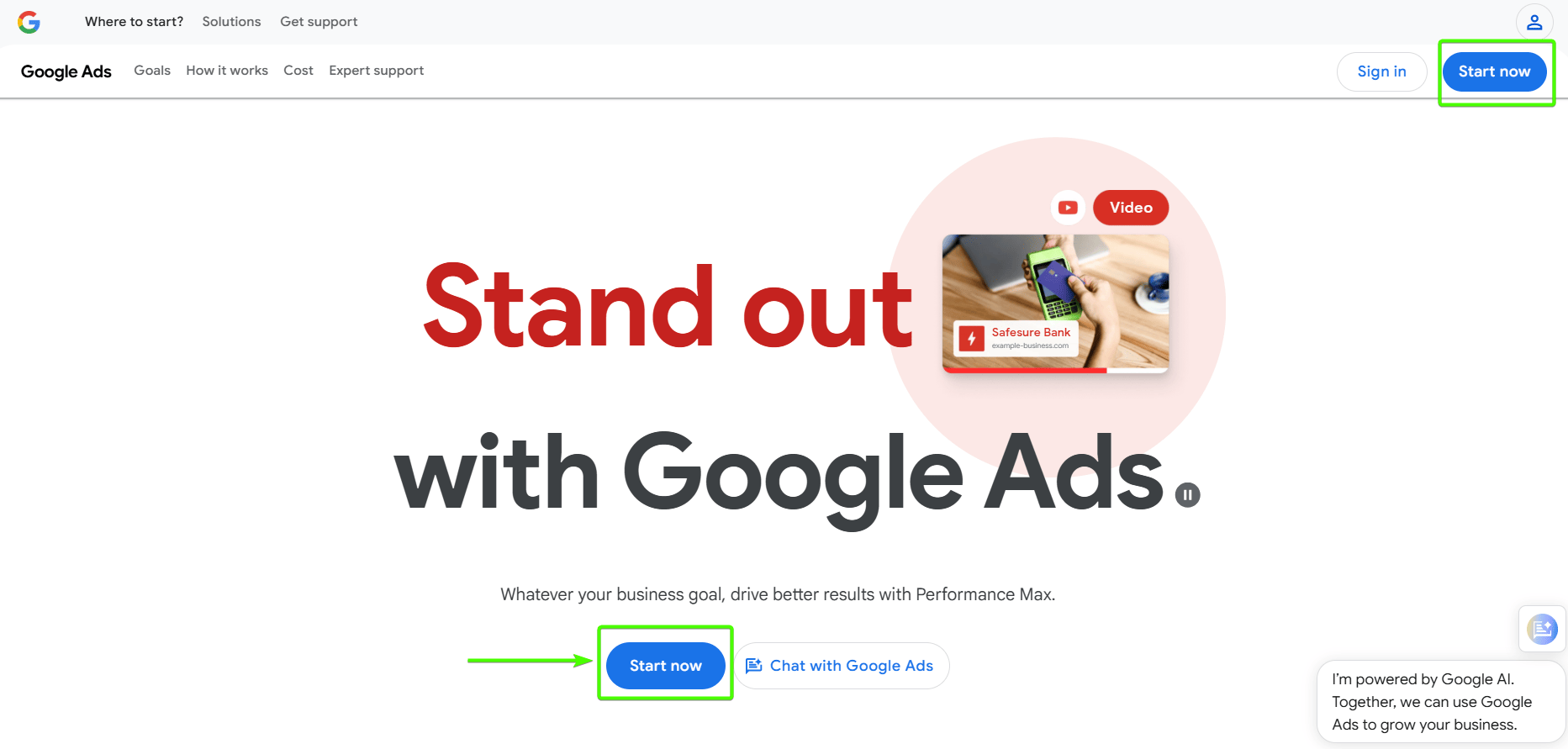
Starting Your First Google Ads Campaign for Addiction Treatment
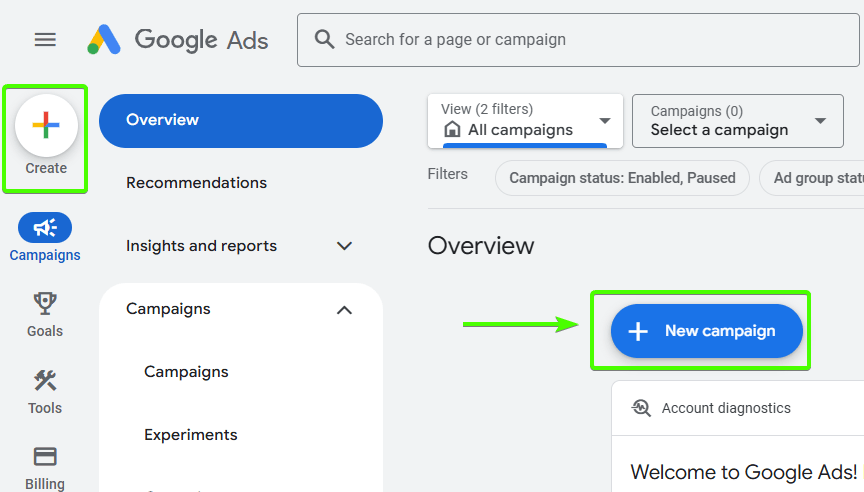
Once inside the dashboard, click on the Campaigns section in the left menu. You will then see a button labeled New Campaign.
Clicking this button begins the campaign creation process where Google will guide you through selecting your marketing objective and campaign settings.
This is where your advertising strategy begins to take shape.
Campaign Structure and Settings
Selecting the Right Goal for Patient Inquiries
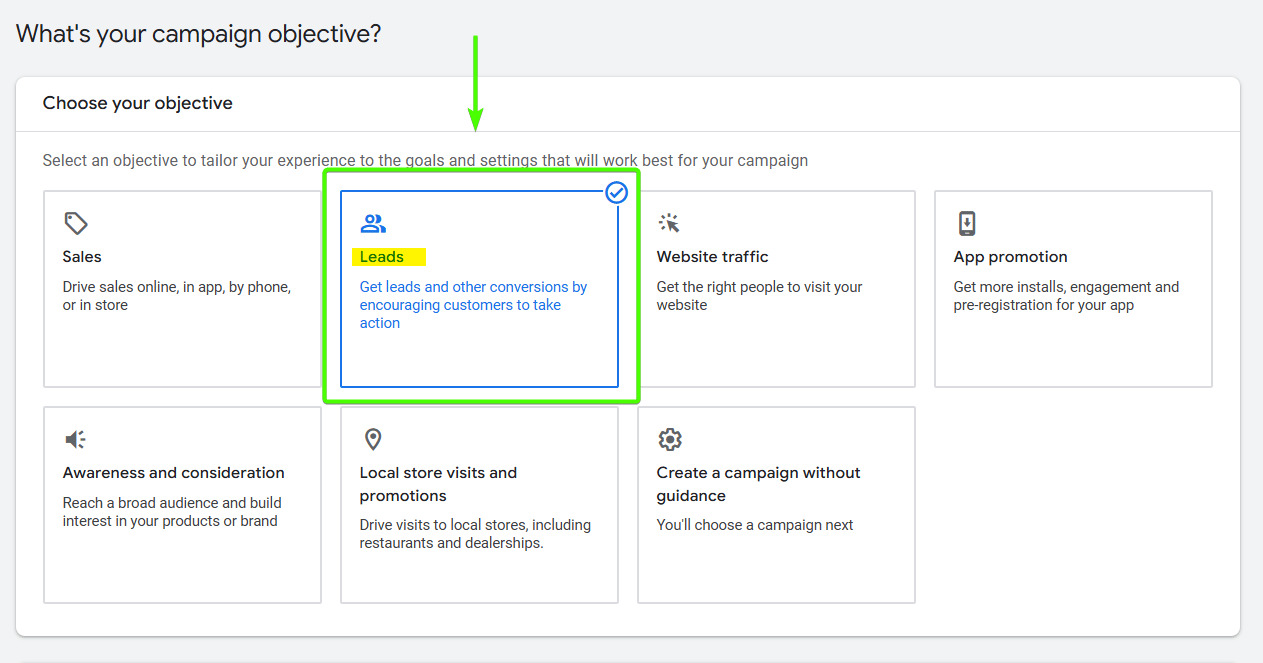
Google Ads allows advertisers to choose a campaign objective that guides how the system optimizes performance.
For addiction specialists, the most appropriate objective is Leads.
Selecting the Leads objective signals to Google that your goal is to generate direct inquiries such as phone calls, form submissions, or appointment requests.
Since addiction treatment decisions often involve urgent situations, optimizing campaigns for lead generation helps ensure that ads appear to individuals most likely to contact a treatment provider.
Choosing the Best Campaign Format for Treatment Services
Google offers multiple campaign formats, including Display, Video, and Shopping campaigns.
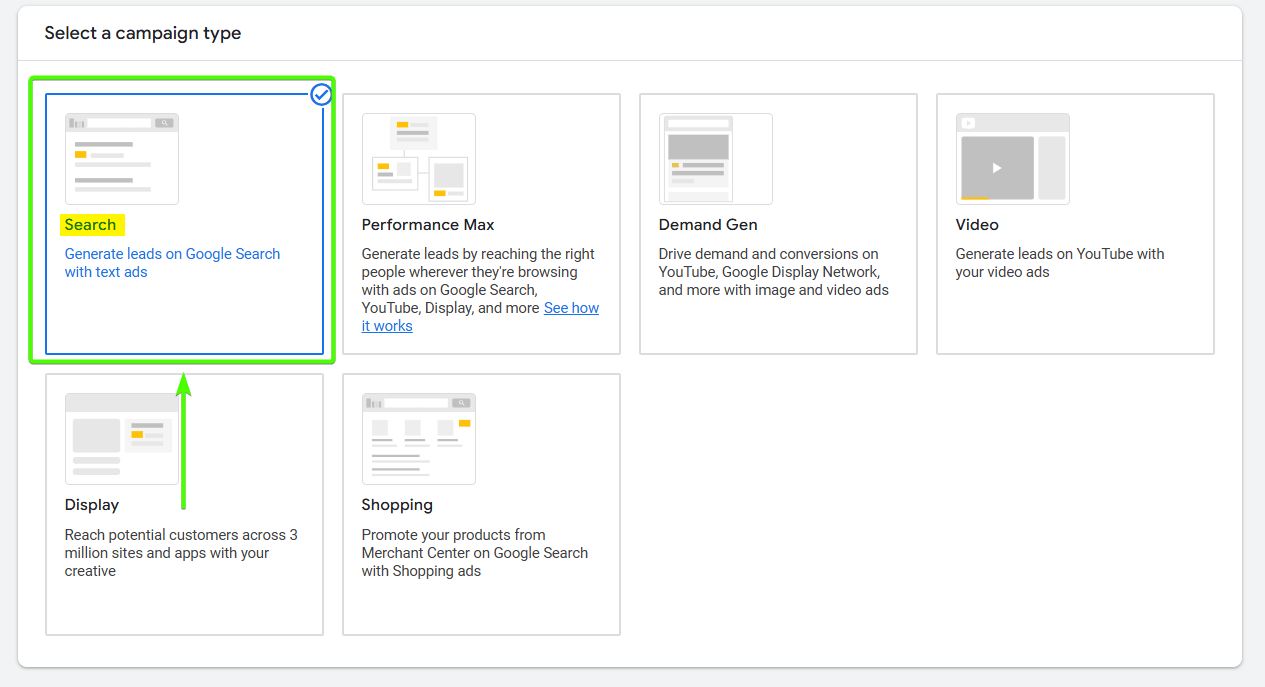
For addiction specialists, the most effective starting point is Search Campaigns.
Search campaigns show text ads directly within Google search results when users type specific keywords. Because the person searching is already looking for help, these campaigns tend to generate highly qualified inquiries.
Someone searching “drug addiction counselor near me” is already expressing strong intent, which makes search campaigns one of the most powerful tools for treatment providers.
Naming Your Campaign for Better Organization
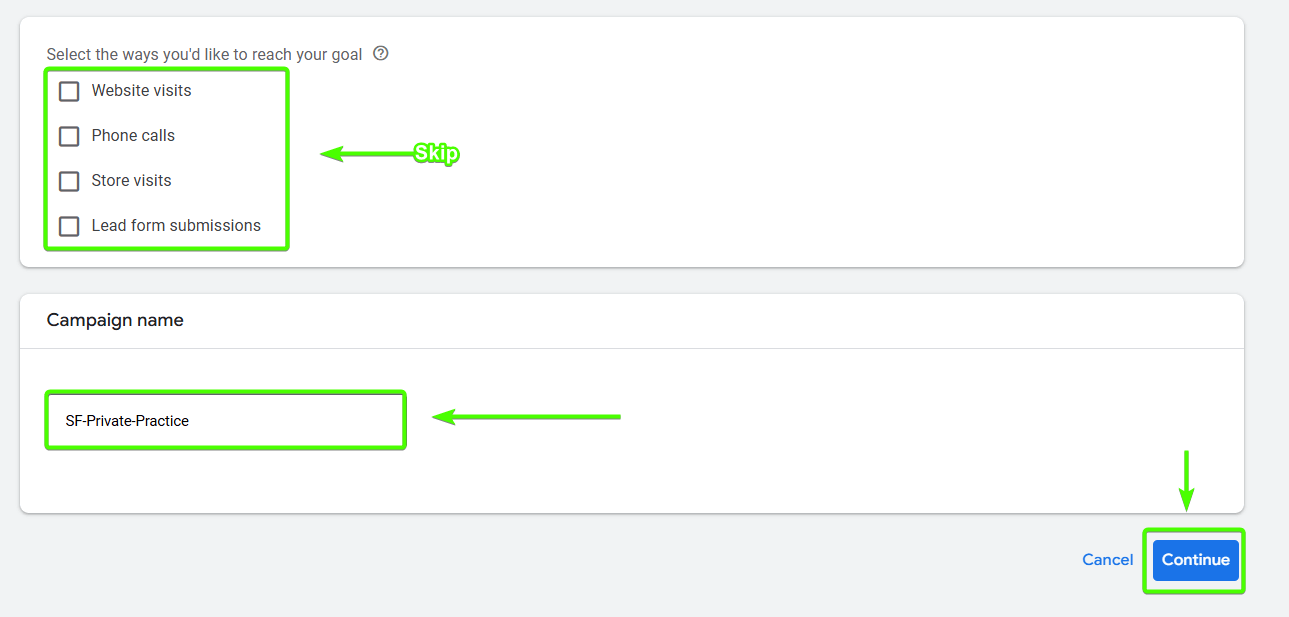
A campaign name helps organize your Google Ads account, especially if you plan to run multiple campaigns in the future.
A clear naming structure makes it easier to identify campaigns and evaluate their performance.
An example campaign name could be:
Addiction Treatment – Search – Lead Generation
Some clinics create separate campaigns for different services such as alcohol treatment, opioid recovery, or addiction counseling. This allows more precise budget allocation and keyword targeting.
For this guide, we will name our campaign, SF-Private-Practice, targeting the San Francisco Bay Area.
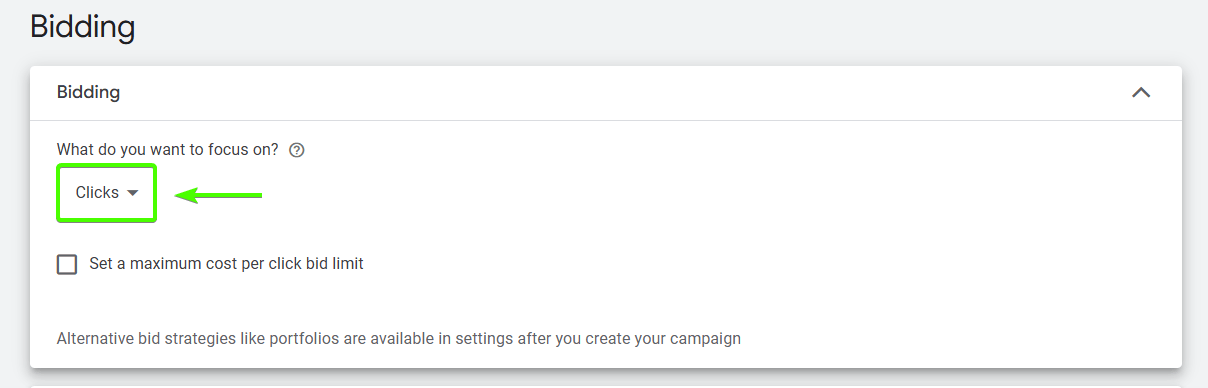
Bidding Strategy
The bidding strategy is the method by which you tell Google Ads how to manage your budget in the auction.
Since you are launching a new campaign, the initial choice should be Clicks.
This strategy directs Google’s algorithm to get you the most traffic possible within your daily budget, ensuring your new ads receive enough impressions and clicks to quickly gather performance data on your keywords, ad copies, and Quality Scores.
Once sufficient conversion data (calls/form fills) is collected, the strategy should be switched to a conversion-focused model like Target CPA or Conversions.
Set Targeting
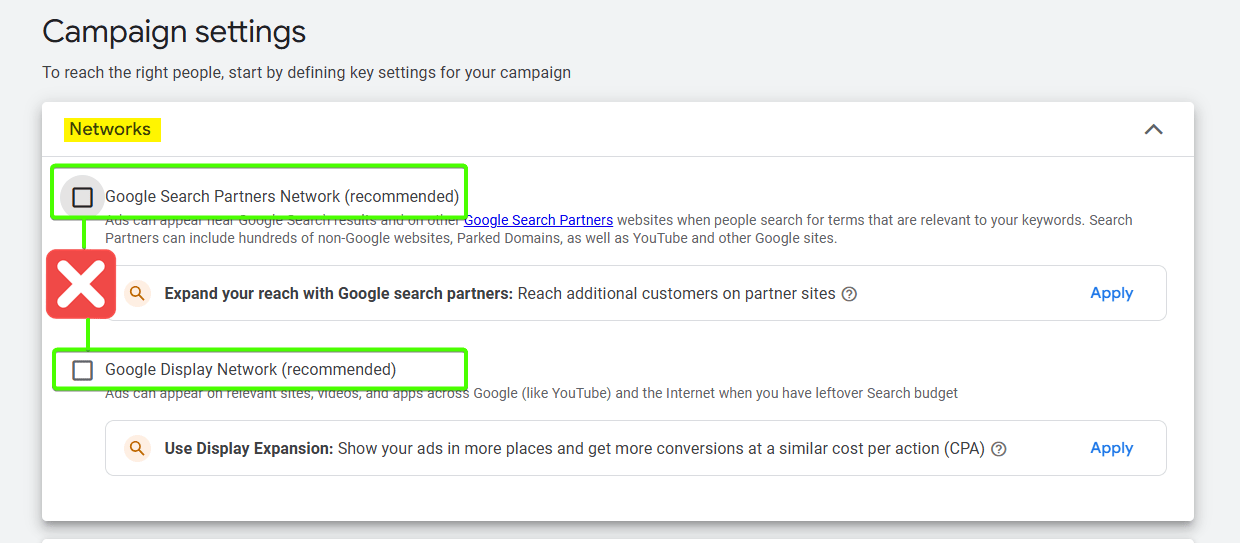
Network Settings for Google Ads for Addiction Specialists
The network settings determine where your text ads are eligible to appear across Google.
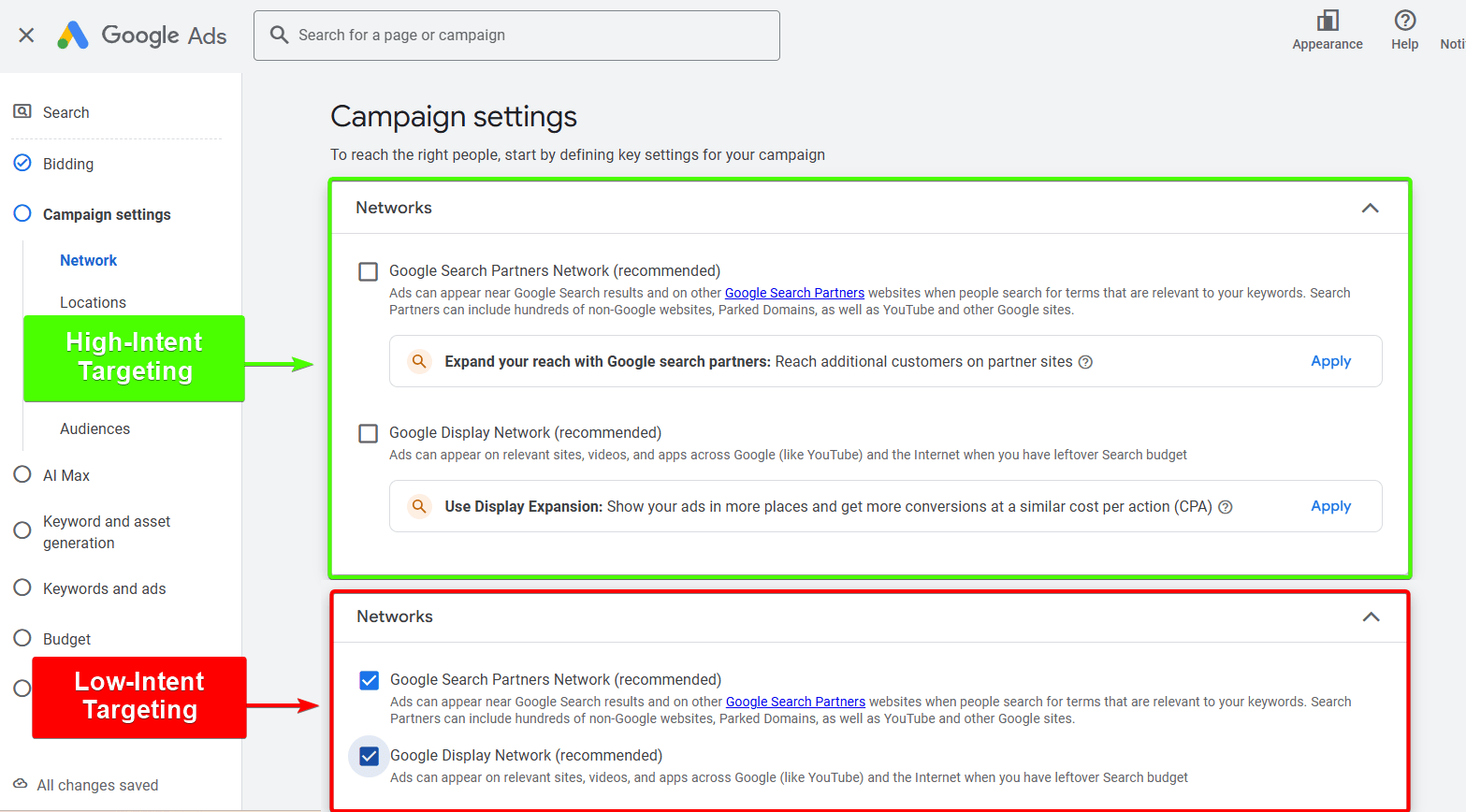
It is important for you to disable both Search Partners (other search engines that use Google’s results) and the Display Network (millions of non-search websites and apps).
These networks tend to generate low-quality, unfocused traffic that is less likely to convert into a genuine patient call.
By disabling them, the campaign budget is exclusively focused on the main Google Search results page, where user intent is highest and where the potential client is actively seeking a solution.
Locations
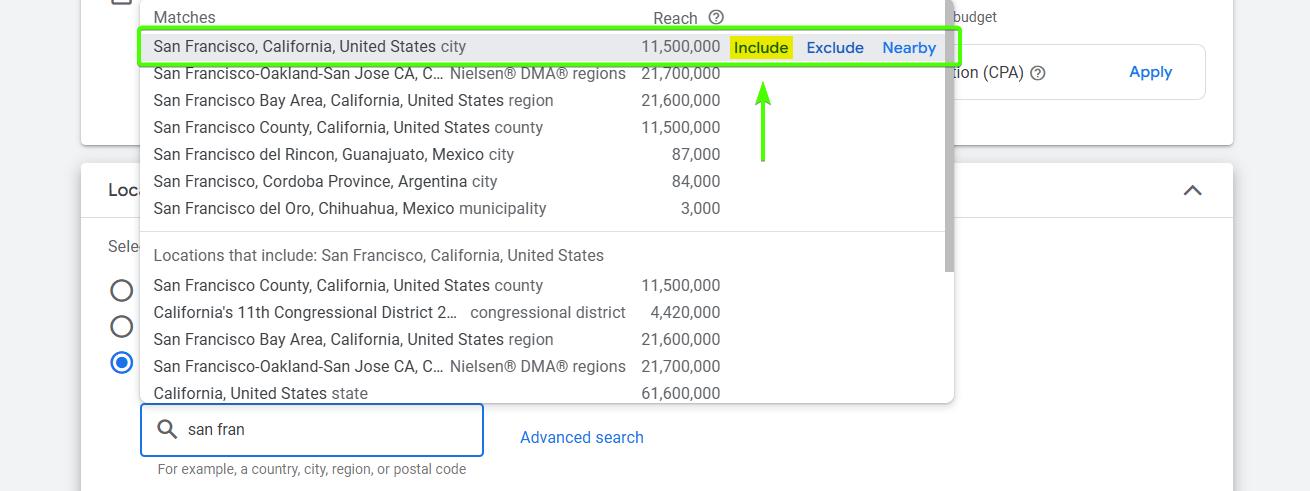
Setting the Locations in your Google Ads campaign defines the specific geographic areas where your advertisements will be eligible to run.
This should typically be a limited area, such as the San Francisco Bay Area (including San Francisco, Oakland, Berkeley, and the Peninsula), or the entire state of California if you offer telehealth services and are licensed to practice across the state.
This targeting ensures your valuable advertising budget is spent only on potential clients who can realistically access your physical office.
Radius targeting
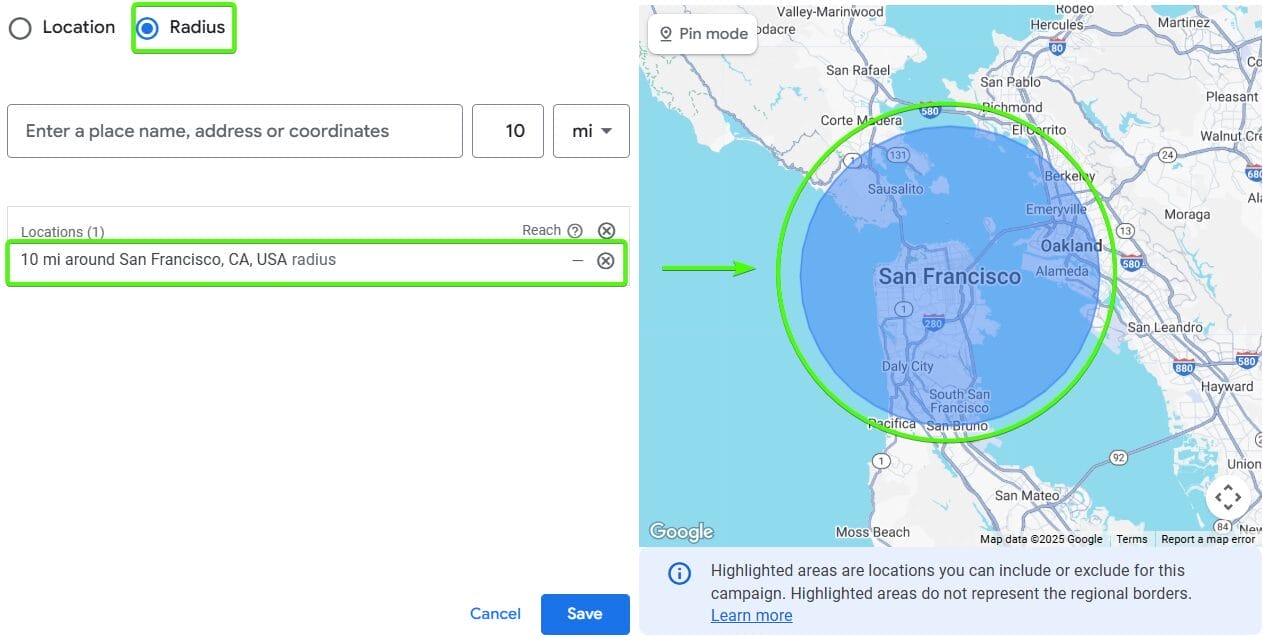
Radius targeting is a method of defining your service area by drawing a circle (a radius) around a central point, usually your physical office location.
Instead of selecting an entire city, you might choose a 10-mile radius around your practice.
This is particularly effective if patients are expected to travel to a specific physical office, as it precisely targets the most convenient and likely potential patient base within the dense San Francisco metropolitan area, while excluding the less viable far-away areas.
Inside the location settings, choose the option Presence: People in or regularly in your included locations. This prevents ads from appearing to users who are merely researching another location from afar.
Advertisers can also exclude locations where services are not offered. Another option is radius targeting, which allows ads to appear within a set distance from the clinic.

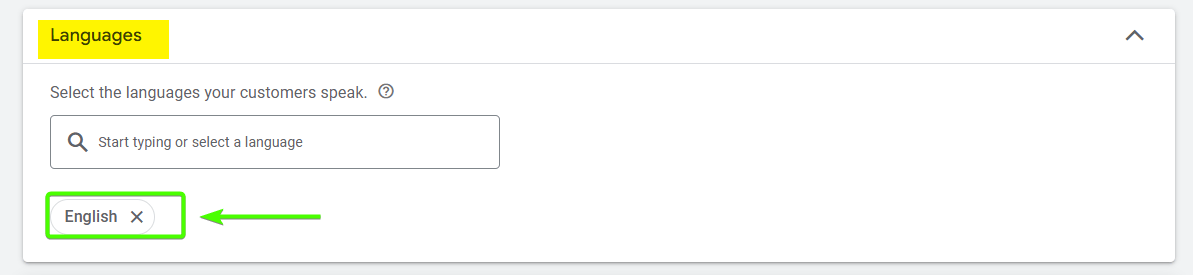
Selecting Languages Your Patients Speak
Language settings help ensure your ads appear to users who can understand the content.
Many treatment centers target English speakers, but clinics that offer bilingual support may include additional languages such as Spanish.
Selecting the correct language settings ensures that your message is clearly communicated to individuals seeking treatment.
Controlling When Your Ads Appear to Potential Patients
Campaign duration refers to how long your Google Ads campaign will run. When creating a campaign, you can either allow it to run continuously or set a specific start and end date. Most addiction treatment providers choose to run campaigns continuously so their clinic can appear whenever someone searches for help.
Addiction-related searches often happen during urgent or emotional situations, so keeping the campaign active at all times helps ensure your clinic is visible when someone needs immediate support.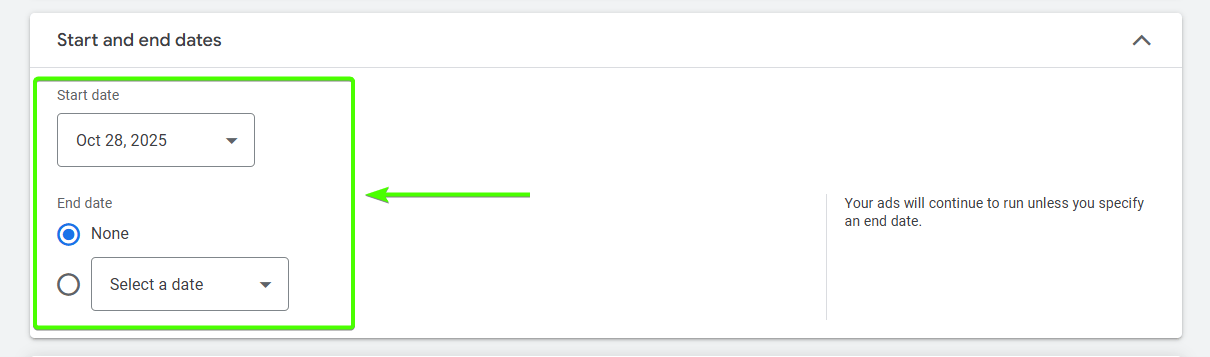
Ad schedule, on the other hand, controls the specific hours and days when your ads are allowed to appear. This setting is helpful when your clinic wants inquiries to come in during certain hours when staff members are available to answer calls or respond to messages.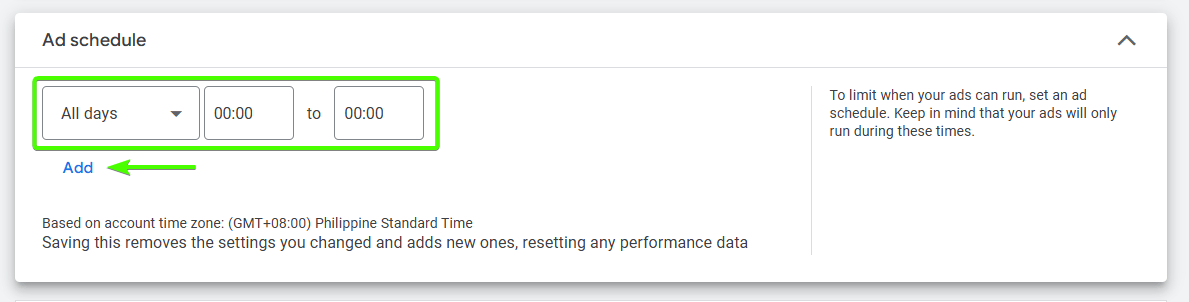
For example, an outpatient counseling clinic may schedule ads from 8:00 AM to 8:00 PM Monday through Saturday so that potential patients can speak directly with a staff member when they call. Another treatment center that offers a 24-hour hotline might choose to run ads all day and night to capture urgent searches at any time. Adjusting the ad schedule allows addiction specialists to align their advertising with their clinic’s availability and patient intake process.
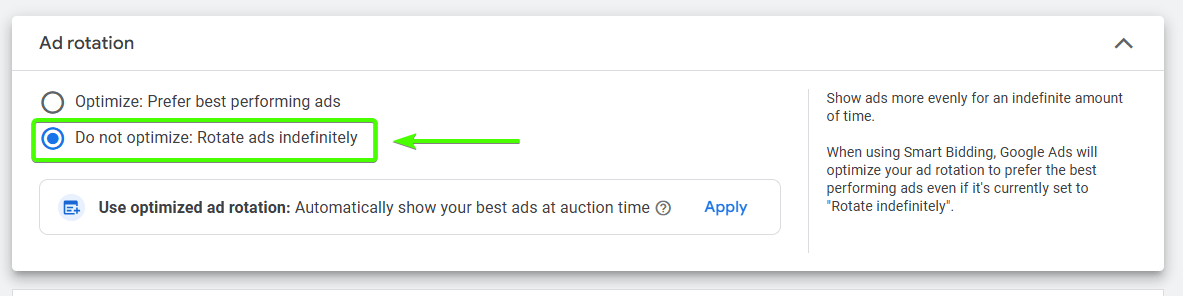
Ad Rotation
Ad rotation settings determine how multiple ad variations are displayed. Selecting Do Not Optimize at the beginning allows all ads to receive similar exposure while performance data is collected.
Need a predictable flow of treatment inquiries instead of uncertain referrals? YoYoFuMedia specializes in building high-intent Google Ads campaigns for healthcare providers and clinics.
Schedule Your Free Strategy Call
Writing Effective Google Ads for Addiction Treatment
Creating effective ads requires clear, compassionate messaging. People searching for addiction treatment are often experiencing stress or urgency, so ad copy should focus on support, professionalism, and confidentiality.
An example ad might highlight services such as professional counseling, confidential consultations, and evidence-based treatment programs.
Strong ad copy reassures potential patients that they are reaching out to a qualified and trustworthy professional.
Identifying High-Intent Search Terms for Addiction Treatment
Keywords determine when your ads appear.
Addiction specialists should focus on high-intent keywords that indicate someone is actively searching for treatment. Examples include:
- addiction specialist near me
- alcohol addiction counseling
- drug rehab center near me
- substance abuse therapist
These keywords help ensure your ads appear when people are most likely to seek professional help.
Using Google’s Keyword Planner
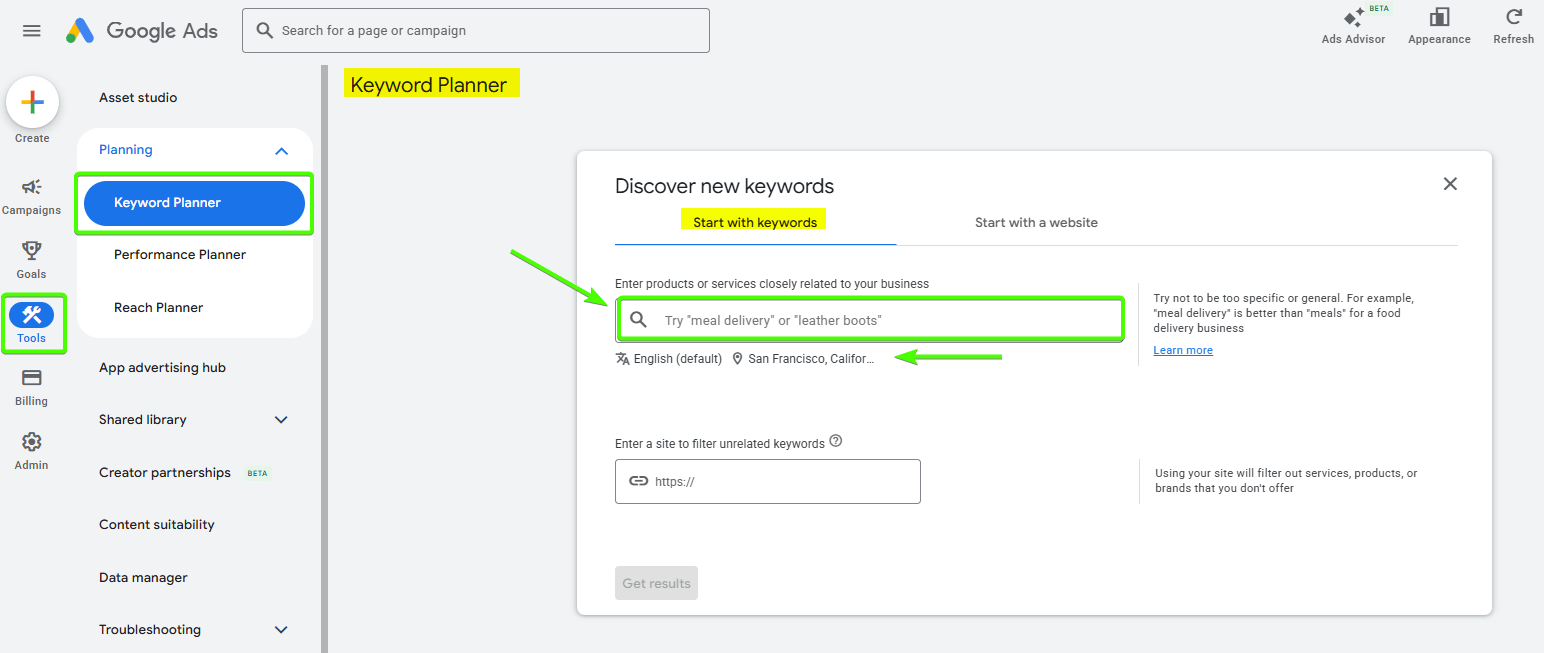
Google Ads includes a tool called Keyword Planner, which helps advertisers discover new keyword opportunities.
To access it, click the Tools and Settings menu in Google Ads and select Keyword Planner. From there, you can explore search volumes and discover related terms people frequently search.
This tool helps addiction specialists identify which treatment-related searches occur most often.
Understanding Keyword Match Types
Keyword match types determine how closely a user’s search query must match your chosen keyword before your advertisement is triggered. These match types help advertisers control when their ads appear and ensure that ads are shown to relevant searches.
Broad match is the most flexible option. It allows Google to show your ad for searches related to your keyword, even if the exact words are different.
For example, if your keyword is addiction counselor, your ad may appear for searches such as:
- substance abuse therapist
- drug counseling services
- help for addiction recovery
This match type can help discover new keyword opportunities but may also attract some unrelated searches.
Phrase match offers more control. Your ad appears when the search includes the keyword phrase in the same order, although other words may appear before or after it.
For instance, if your phrase match keyword is “addiction treatment center”, your ad may appear for searches like:
- best addiction treatment center near me
- local addiction treatment center for alcohol recovery
Phrase match helps maintain relevance while still reaching variations of the search.
Exact match provides the highest level of precision. Your ad appears only when the search closely matches your keyword or very similar variations.
For example, an exact match keyword [drug addiction specialist] would trigger ads for searches such as:
- drug addiction specialist
- drug addiction specialists near me
This match type is useful when you want strict control over when your ads are shown.
Many advertisers use a combination of broad, phrase, and exact match keywords to balance reach and precision while still attracting highly relevant searches.
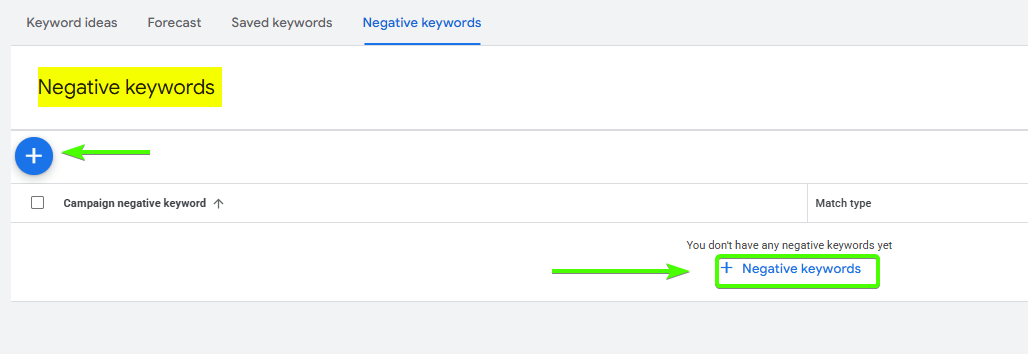
Filtering Irrelevant Searches With Negative Keywords
Negative keywords are terms that prevent your ads from appearing when a search contains those words. They are important because they help protect your advertising budget from clicks that are unlikely to become real patient inquiries.
When advertising addiction treatment services, many searches may relate to education, employment, or free resources rather than people seeking professional treatment. Without negative keywords, your ads could appear for these unrelated searches, resulting in wasted ad spend.
For example, an addiction specialist promoting counseling services may want to avoid searches related to academic research or career opportunities. In this case, negative keywords could include terms such as:
- jobs
- salary
- training
- degree
- course
- certification
Someone searching for ‘addiction counselor training’ or ‘substance abuse jobs’ is not looking for treatment services, so these searches should be excluded.
Other examples of negative keywords might include:
- free rehab (definition, meaning, or statistics)
These searches are often informational rather than treatment-focused.
By carefully selecting negative keywords, addiction specialists ensure their ads appear only to individuals who are actively looking for treatment or professional support. This improves the quality of inquiries and helps make advertising campaigns more efficient.
Structuring Your Campaign With Strategic Ad Groups
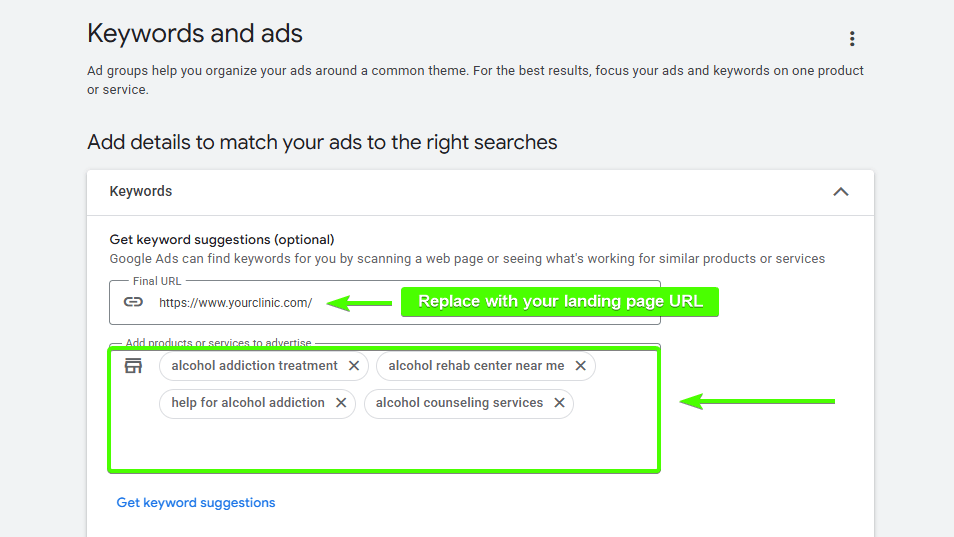
An ad group is a section within a Google Ads campaign that contains a specific set of keywords and ads. The purpose of an ad group is to organize related search terms together so that ads can closely match what people are searching for.
Creating separate ad groups for different services allows more relevant ads to appear for each search. When the ad message closely matches the search query, users are more likely to click the ad and contact the clinic.
For example, an addiction treatment campaign might include several ad groups such as:
- Alcohol Addiction Treatment
- Drug Addiction Counseling
- Opioid Recovery Programs
Each ad group contains keywords and ad copy specifically related to that service.
Final URL and Display Path
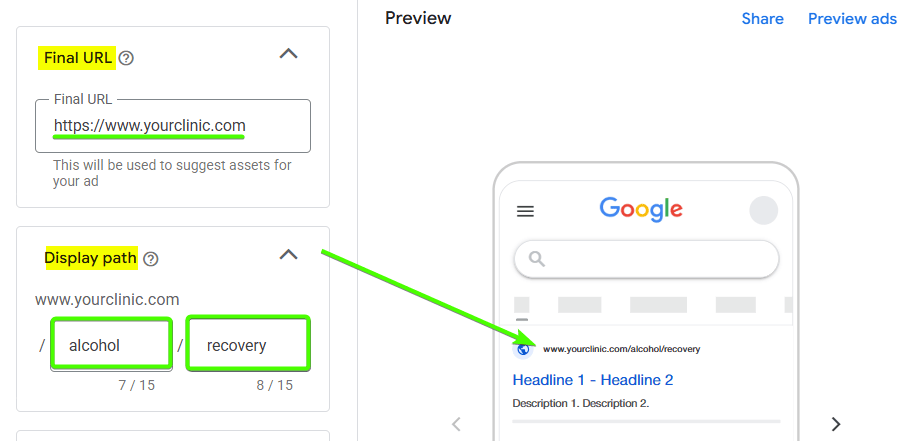
The Final URL is the page where users arrive after clicking your ad. This page should match the service mentioned in the ad to create a consistent experience for visitors.
For example, an ad promoting alcohol addiction treatment should direct users to a page specifically about alcohol recovery services rather than a general homepage.
The display path is the shortened version of the website address that appears in the ad. It helps users understand what they will find on the page.
Example:
Final URL
www.yourclinic.com/alcohol-treatment
Display Path
yourclinic.com/alcohol/recovery
Keeping the ad message, keywords, and landing page closely aligned improves both user experience and ad performance.
Building a Landing Page That Converts Searches Into Admissions
A landing page is the webpage users arrive at after clicking your Google Ad. It plays an important role in turning interested visitors into patient inquiries or consultation requests. While an ad captures attention in search results, the landing page is responsible for providing the information and reassurance needed for someone to take the next step and contact your clinic.
An effective landing page for addiction specialists should include several key components that guide visitors toward contacting your practice:
- A headline is the main text displayed at the top of the page. It should clearly communicate the primary benefit of your service and reassure visitors that they have found the right place for help.
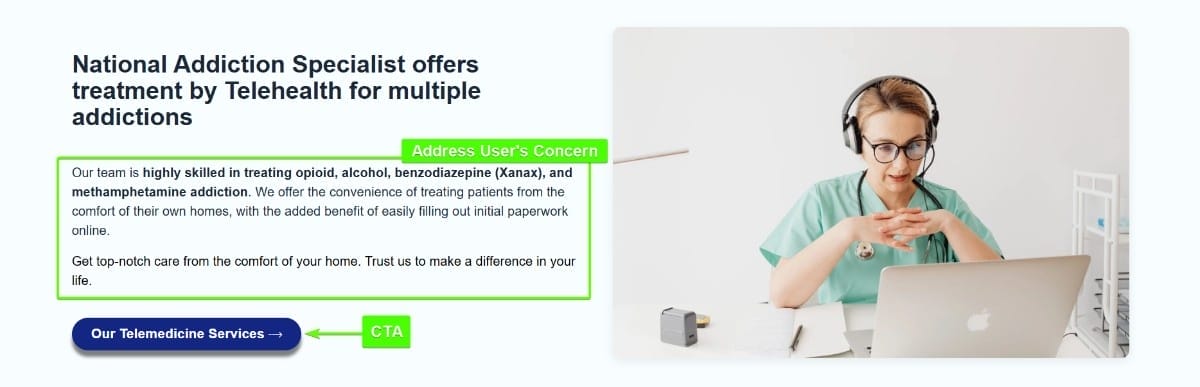
- A hero image is the large visual displayed near the top of the page. This image helps create an emotional connection with visitors and reinforces the message of support and recovery. Addiction treatment pages often use calming imagery, supportive counseling scenes, or welcoming clinic environments to build trust.
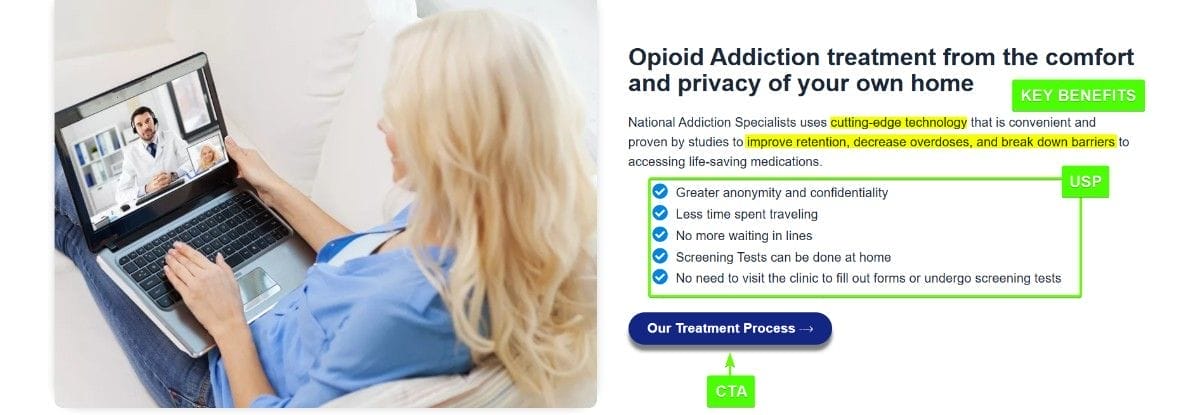
- A call-to-action (CTA) is the instruction that tells visitors what step to take next. It encourages them to contact your clinic or request help.
- Key benefits describe the main advantages of choosing your treatment center. These short explanations help visitors quickly understand how your clinic can help them.
- A unique selling proposition (USP) explains what makes your clinic different from other treatment providers. This could include specialized therapy approaches, years of experience, or a supportive recovery environment that focuses on long-term success.
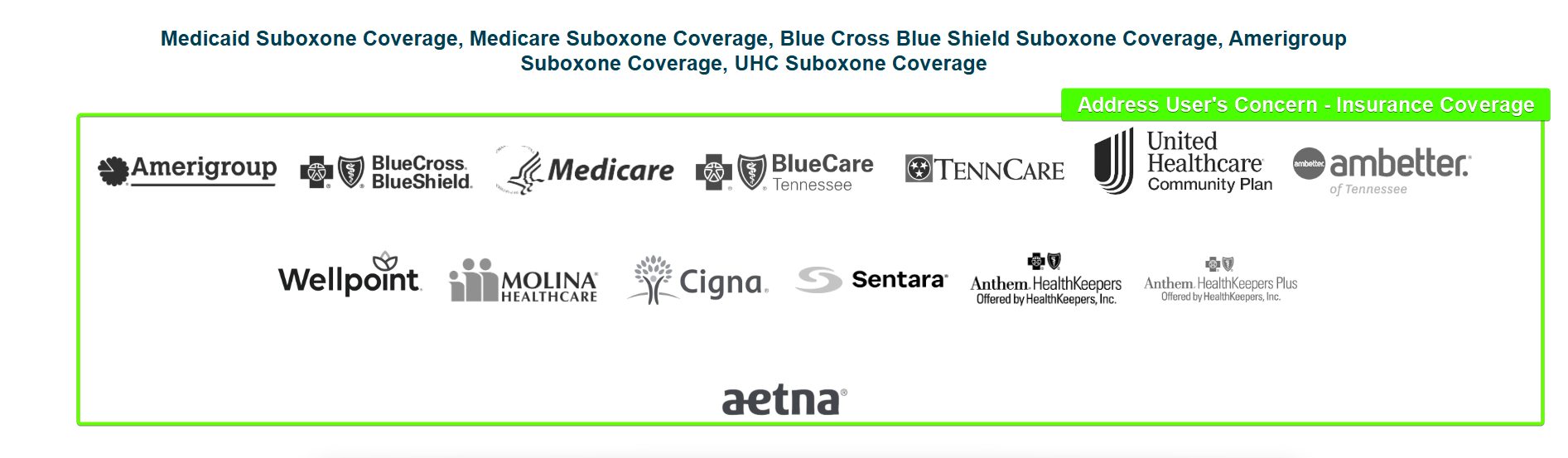
- The landing page should also address common concerns that patients or families may have, such as confidentiality, insurance acceptance, or treatment approaches. Providing clear answers helps reduce hesitation and builds confidence in your services.
- A short lead form allows visitors to easily submit their contact information. Instead of asking for many details, most effective forms simply request a name, phone number, and brief message so potential patients can quickly reach out.
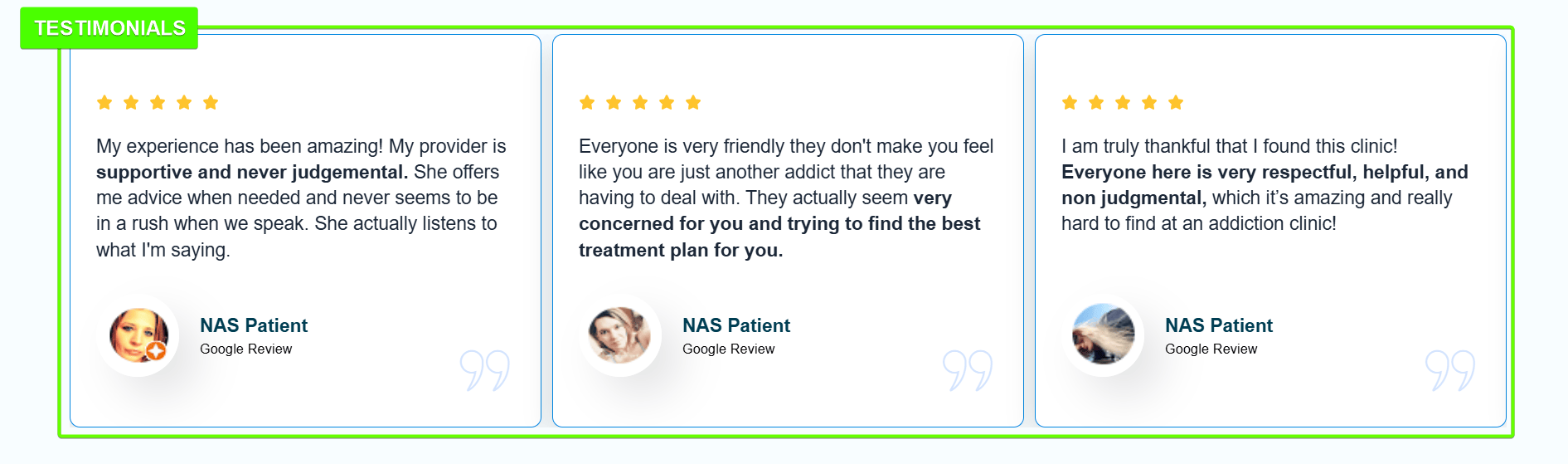
- Testimonials or social proof provide reassurance that other individuals have successfully received help from your clinic. Positive feedback from past patients or families helps build credibility and encourages visitors to take the next step toward seeking treatment.
When these elements are combined effectively, a landing page becomes a powerful tool that transforms online searches into real patient admissions.
National Addiction Specialists (NAS) Landing Page:


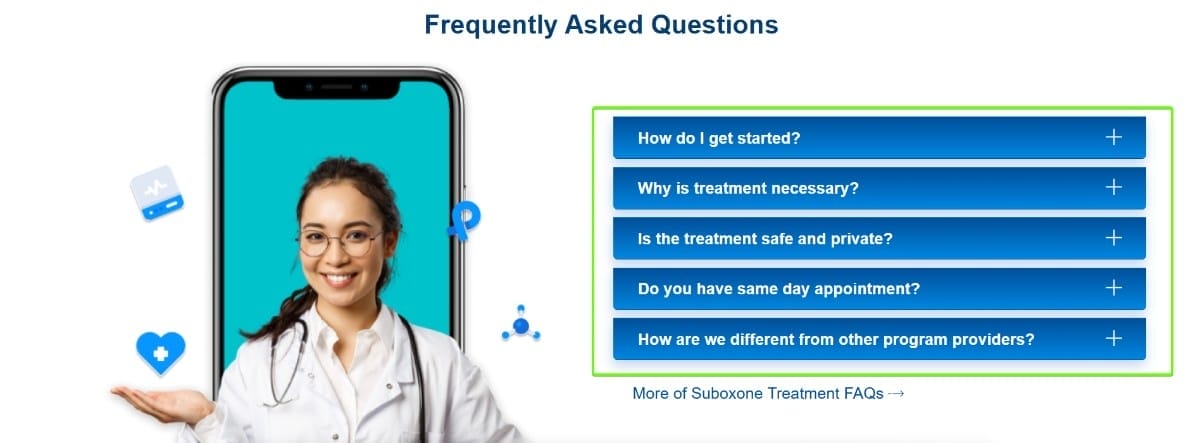
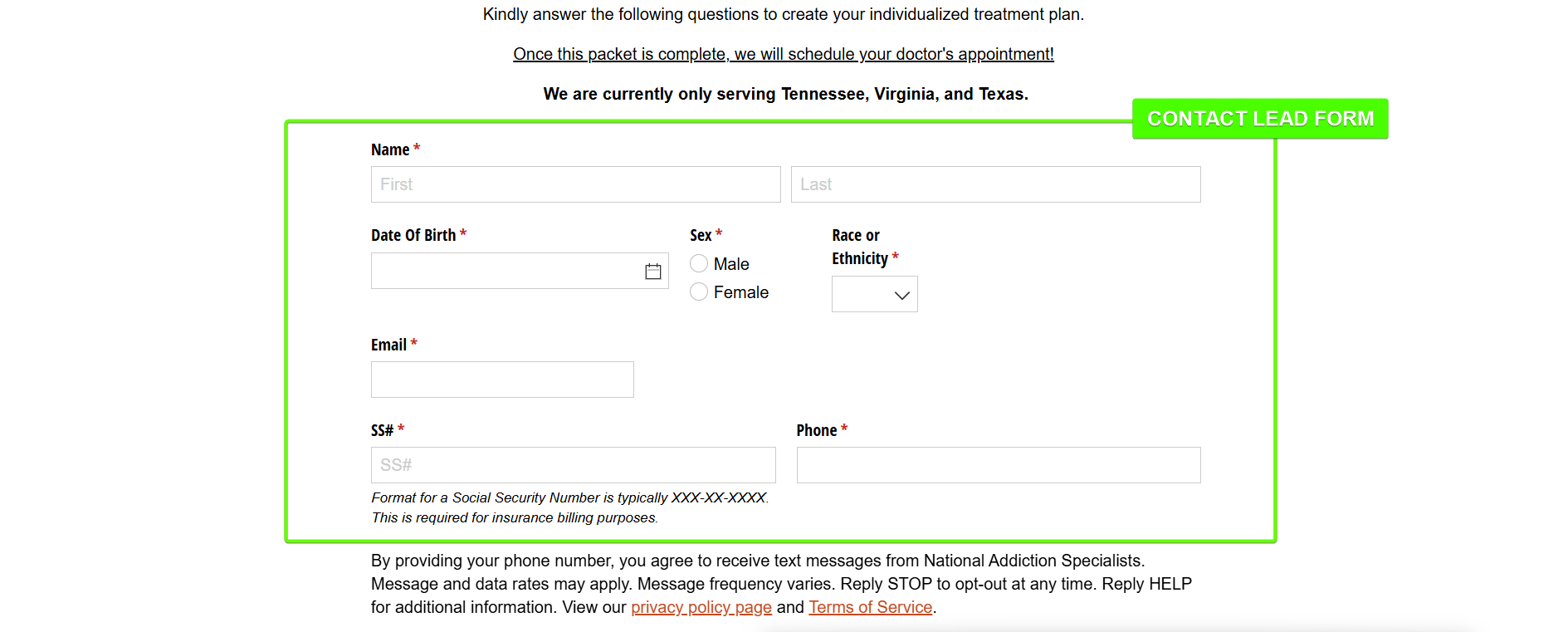
Tired of waiting for referrals to grow your addiction treatment practice? Our experts can help gain consistent patient inquiries for your clinic.
Writing Headlines That Encourage Patients to Reach Out
Headlines are the most visible part of your ad. They should communicate the primary benefit of contacting your clinic.
Strong headlines attract attention while reassuring individuals that professional help is available.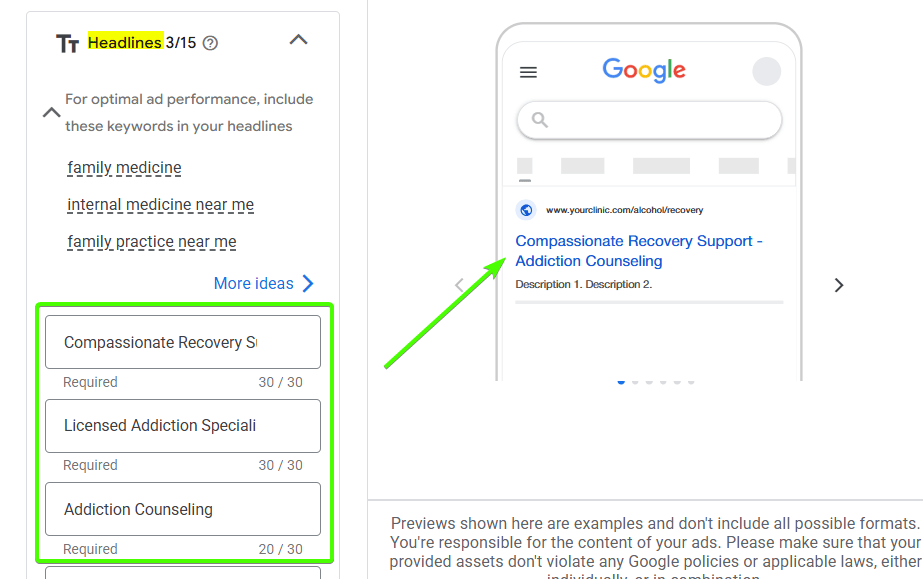
Creating Descriptions That Build Trust
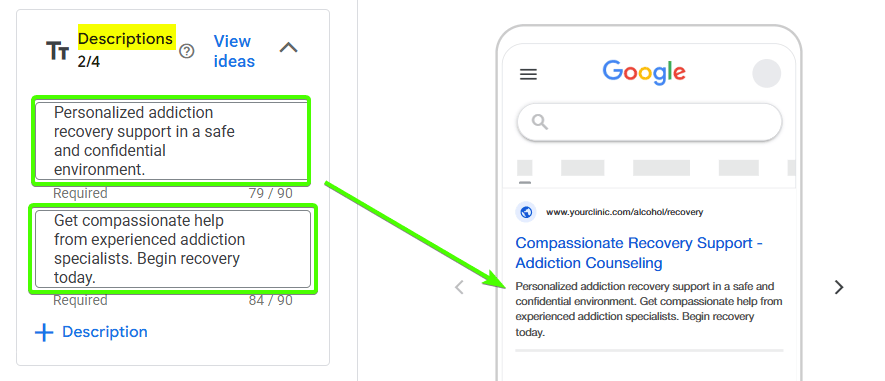
Descriptions provide additional information about your services. This is where you can explain the benefits of your treatment approach and encourage people to contact your clinic.
Descriptions often highlight experience, compassionate care, and confidential consultations.
Enhancing Your Ads With Extensions
Ad extensions expand your ads with additional information and links. They help increase visibility and improve click-through rates.
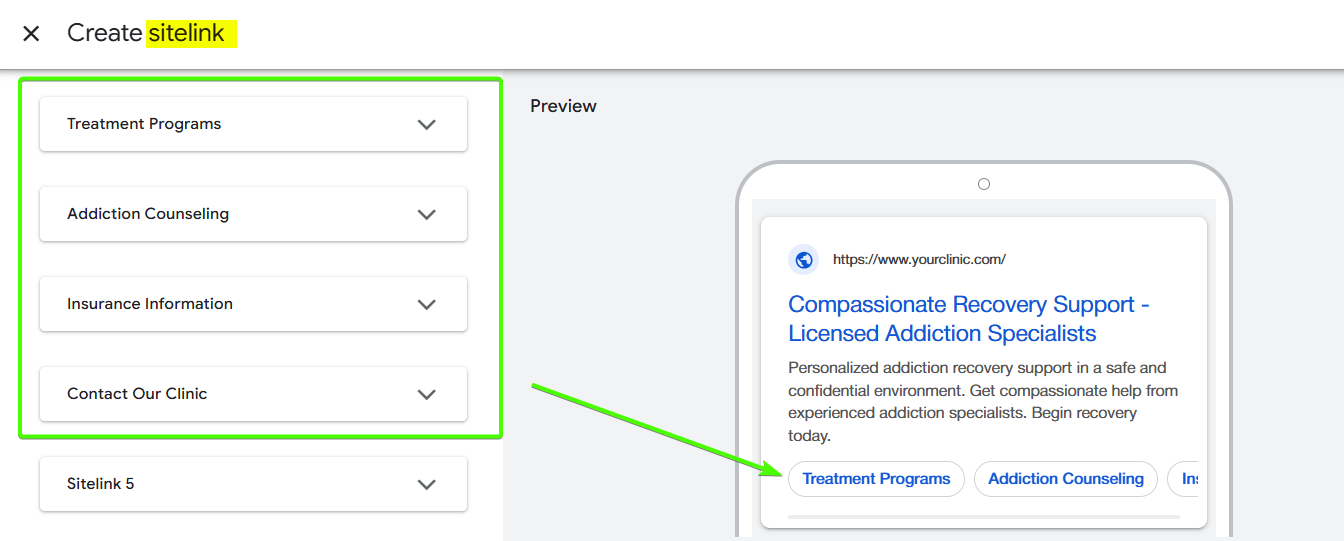
Adding Sitelinks to Guide Users to Key Services
Sitelinks are additional links displayed beneath your main ad.
These links allow users to quickly navigate to the information they need.
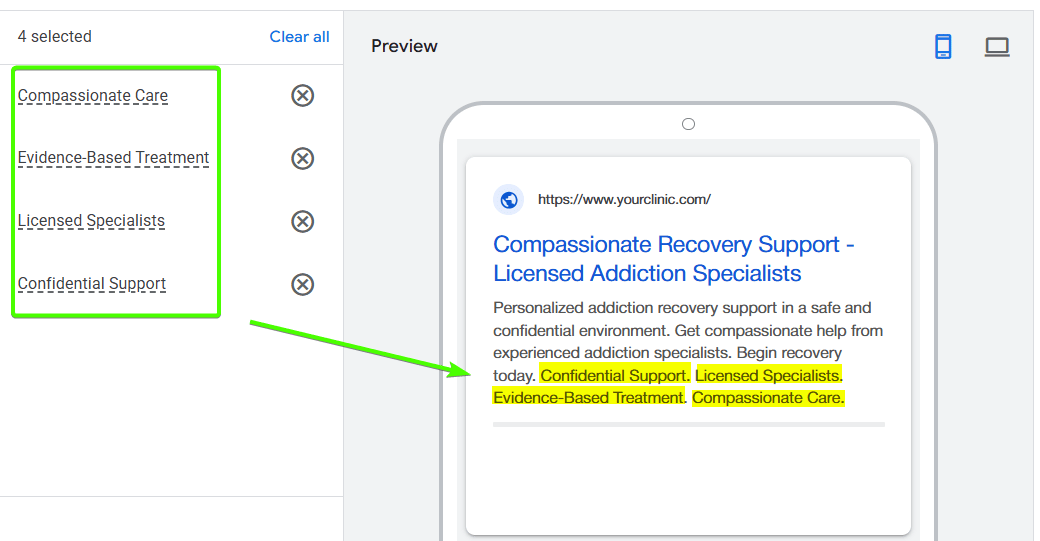
Highlighting Clinic Benefits With Callouts
Callouts emphasize key advantages of your clinic.
These small messages help reinforce trust.
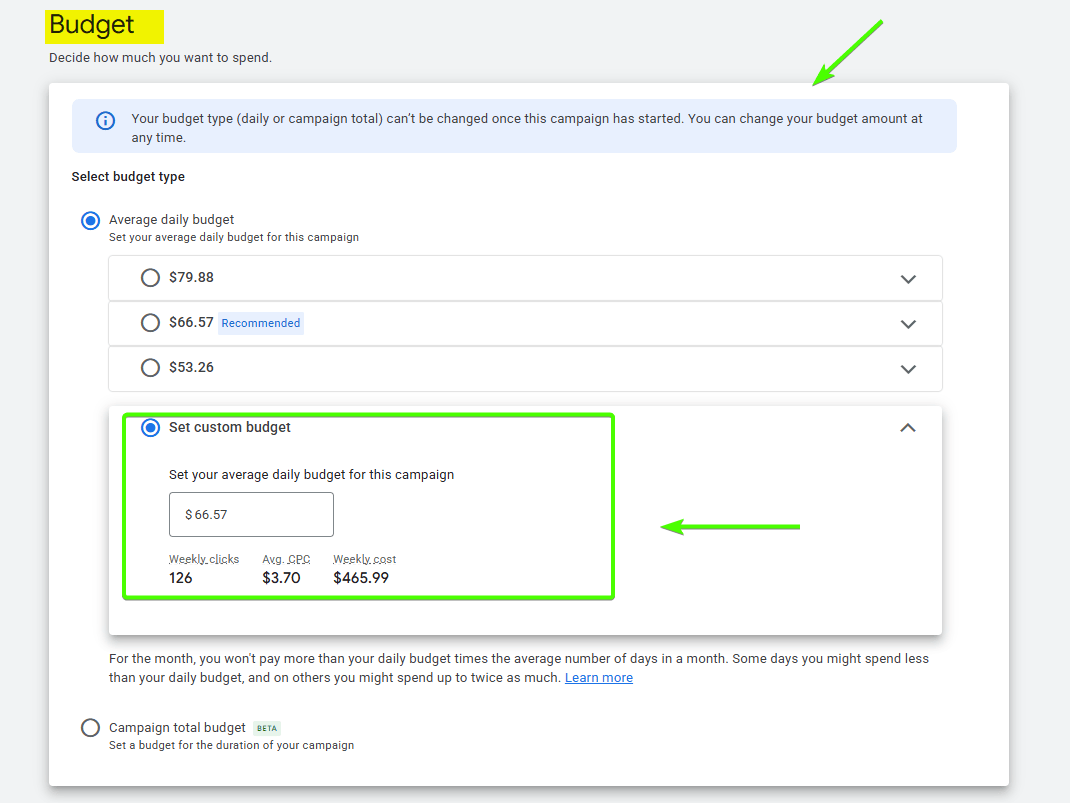
Setting a Realistic Advertising Budget
Your campaign budget determines how much you are willing to spend on advertising each day.
Many addiction specialists begin with a moderate budget to test keyword performance and adjust strategies over time.
Monitoring results closely allows advertisers to gradually increase spending on campaigns that generate high-quality inquiries.
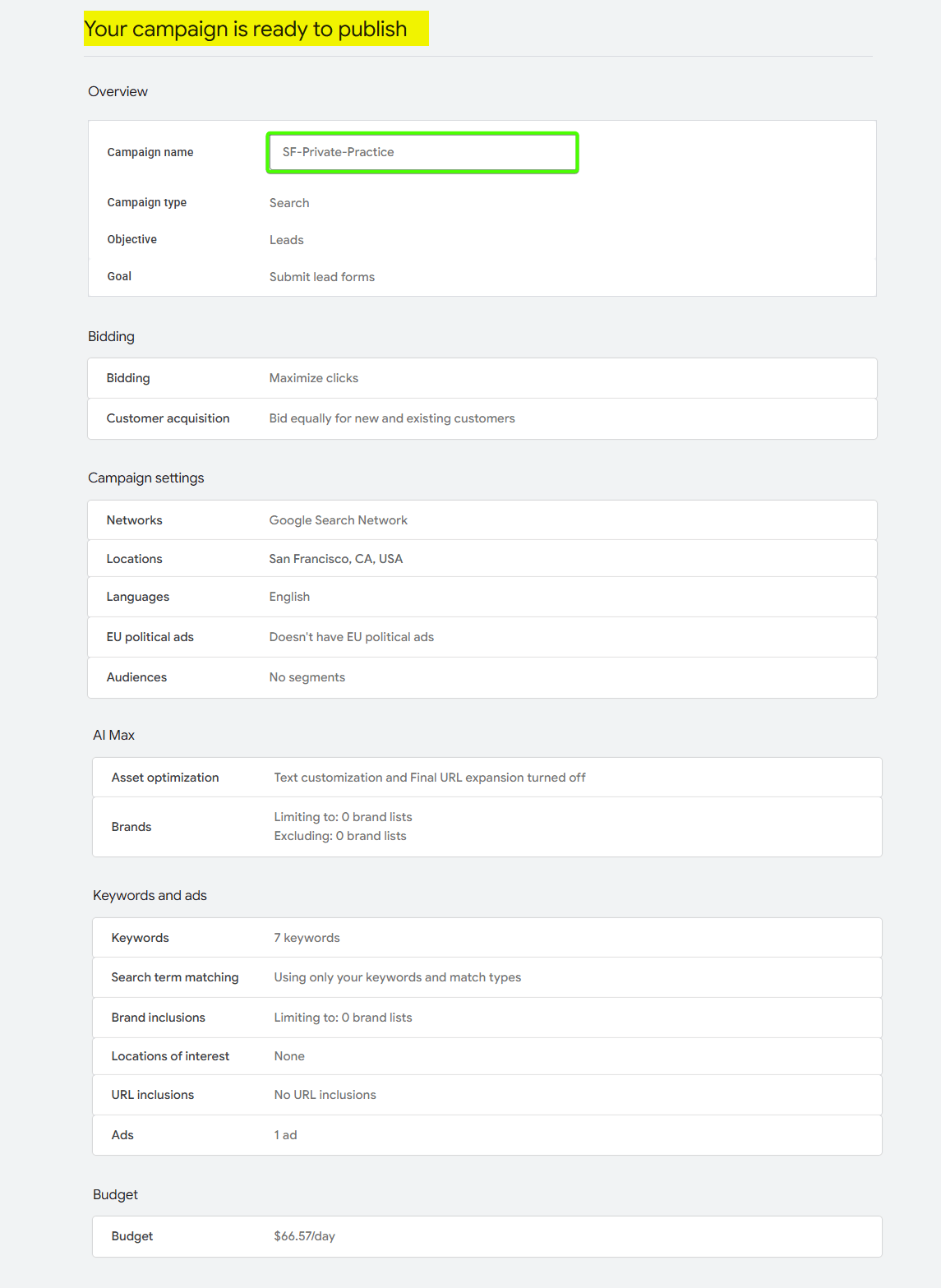
Final Checks Before Activating Your Campaign
Before launching the campaign, review all settings carefully. Confirm that targeting, keywords, ad copy, and landing pages are correctly configured.
Once everything is verified, activate the campaign so Google can begin displaying your ads to people searching for addiction treatment services.
Turning Online Searches Into Real Treatment Admissions
Google Ads provides addiction specialists with an opportunity to connect with individuals searching for help during critical moments. By appearing at the top of search results, treatment providers can reach people who are actively seeking professional support.
With the right campaign structure, compliant advertising practices, and effective landing pages, Google Ads can become a consistent source of qualified patient inquiries.
For clinics looking to grow their admissions and reach more people who need treatment, investing in Google Ads is a powerful step forward.
If you want experienced professionals to build and manage a high-performing campaign, our team at YoYoFuMedia is ready to help. Our specialists have helped thousands of businesses generate measurable growth through strategic Google Ads management.
Discover how we can help your clinic reach more people in need of support.


